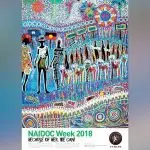

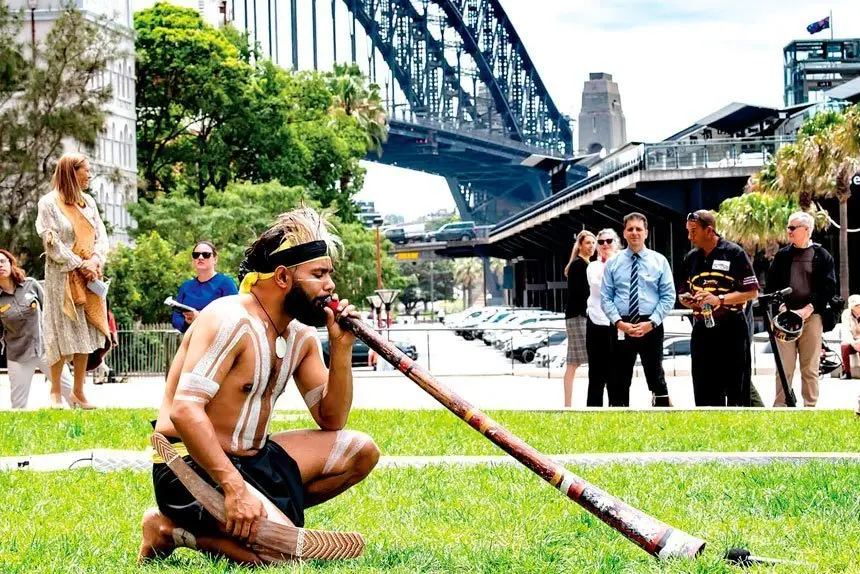
NAIDOC stands for National Aborigines and Islanders Day Observance Committee.
Its origins can be traced to the emergence of Aboriginal groups in the 1920’s which sought to increase awareness in the wider community of the status and treatment of Aboriginal and Torres Strait Islander Australians.
Before the 1920s, Aboriginal rights groups boycotted Australia Day (26 January) in protest against the status and treatment of Indigenous Australians.
By the 1920s, they were increasingly aware that the broader Australian public were largely ignorant of the boycotts.

If the movement was to make progress, it would need to be active.
Several organisations emerged to fill this role, particularly the Australian Aborigines Progressive Association (AAPA) in 1924 and the Australian Aborigines League (AAL) in 1932.
In 1935, William Cooper, founder of the AAL, drafted a petition to send to King George V, asking for special Aboriginal electorates in Federal Parliament.
The Australian Government believed that the petition fell outside its constitutional responsibilities.
On Australia Day, 1938, protestors marched through the streets of Sydney, followed by a congress attended by over a thousand people.
One of the first major civil rights gatherings in the world, it was known as the Day of Mourning.
Following the congress, a deputation led by William Cooper presented Prime Minister Joseph Lyons with a proposed national policy for Aboriginal people.
This was again rejected because the Government did not hold constitutional powers in relation to Aboriginal people.
After the Day of Mourning, there was a growing feeling that it should be a regular event. In 1939 William Cooper wrote to the National Missionary Council of Australia to seek their assistance in supporting and promoting an annual event.
From 1940 until 1955, the Day of Mourning was held annually on the Sunday before Australia Day and was known as Aborigines Day.
In 1955 Aborigines Day was shifted to the first Sunday in July after it was decided the day should become not simply a protest day but also a celebration of Aboriginal culture.
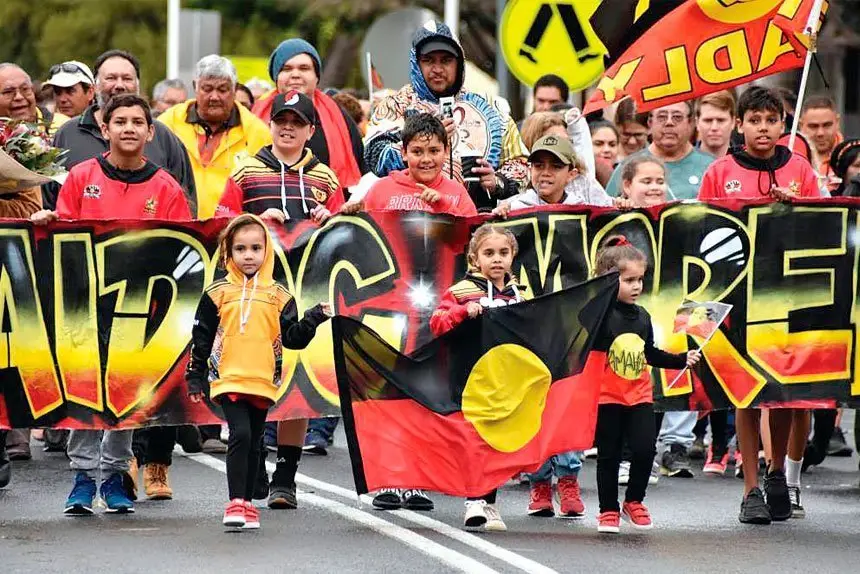
Major Aboriginal organisations, state and federal governments, all supported the formation of the National Aborigines Day Observance Committee (NADOC).
At the same time, the second Sunday in July became a day of remembrance for Aboriginal people and their heritage.
In 1972, the Department of Aboriginal Affairs was formed, as a major outcome of the 1967 referendum.
In 1974, the NADOC committee was composed entirely of Aboriginal members for the first time.
The following year, it was decided that the event should cover a week, from the first to second Sunday in July.
In 1984, NADOC asked that National Aborigines Day be made a national public holiday, to help celebrate and recognise the rich cultural history that makes Australia unique. While this has not happened, other groups have echoed the call.
With a growing awareness of the distinct cultural histories of Aboriginal and Torres Strait Islander peoples, NADOC was expanded to recognise Torres Strait Islander people and culture.
The committee then became known as the National Aborigines and Islanders Day Observance Committee (NAIDOC).
This new name has become the title for the whole week, not just the day.
The National NAIDOC Committee respectfully acknowledges the now defunct and inaccurate term ‘Aborigines’, whilst retaining the term in our title due to historic use by our Elders in establishing this week of commemoration in 1938.
As at 1967 the ongoing registered title of the Committee became the National Aboriginal and Islander Day Observance Committee.