
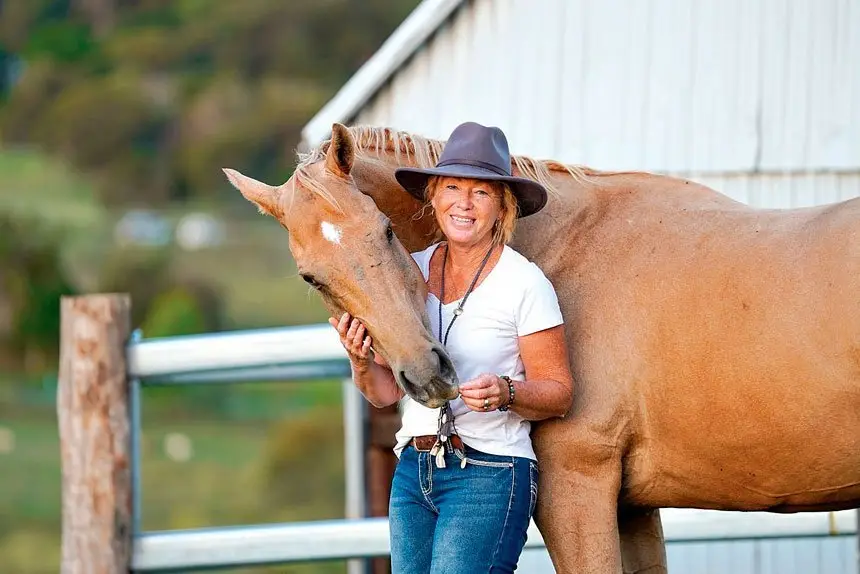
WHEN Deb McLean saw her unruly grandchild interact with a horse, the transformation in his behaviour stunned her. And that set her onto a journey that has led to a business with a difference at Prenzlau.
The grandchild had come to live with her and horse-mad Deb found that he was able to regulate his behaviour after spending time with the horse. Once the grandchild left her home, she realised she had found a vocation. And now she runs Pindari Equine Assisted Learning.
The idea is simple on paper. Kids who sometimes come burdened with a whole host of letters, diagnosed with special needs, spend time on her school holiday program and get to know her horses.
These kids, who may have problems socialising with others, blossom as they interact with each other in small groups, no bigger than four, and with their new equine friends.

The key is horses are really affected by body language so the kids have to learn to take a deep breath and calm down so that the horses will let them come near. Sneakily, it’s a way to teach kids who find it very hard to slow down how to be calm.
Deb said, “Horses are sensitive to others’ heartbeats. In a herd, if one’s heartbeat rises, they’ll all bolt. So they are very attuned to each other and to humans who approach them.”
The kids learn how to be present in the moment, no screens here. But while that may seem stressful at first to a youngster, they find the relaxing environment at Pindari the opposite of stress inducing.
“They get really relaxed,” Deb said. “And the horses respond. It gives them that instant reward for good energy. They’re horses for people who struggle with humans. They don’t talk but they really understand body language and they feed off energy.”
But why would Deb choose this path, which involved a fair amount of study – there’s science behind the programs? She explained, “I was a troubled teenager. I was taken away from my family. So I really get how hard it is for youngsters to feel understood. People say they know how you feel but they don’t.”
Couple this with a deep love for horses, which helped her through her troubles, and it’s easy to see why equine therapy appealed to Deb.
You can hear the smile as she says, “The kids love it. They get to be like horses, make noises, be weird, all the things they’re told not to do… there’s no judgment.”