

Published: January 2024 theconversation.com.au
ABOUT 4.4 million Australians, or 18% of our population, live with disability. This number is likely to rise as our population ages.
Adults living with disability can experience a range of benefits from participating in community-based physical activities such as dance, tai chi and yoga, our published review found. Yet adults with disability are less physically active than those without disability, with inclusive community-based physical activities few and far between. This puts people with disability at increased risk of further disability.
People with disability should be able to join a local club or group to participate in physical activity they enjoy, just like the rest of us. So how can we provide more physical activity options?

BENEFITS OF PHYSICAL ACTIVITY
The systematic review included 74 trials with 2954 men and women living with mild-to-moderate physical and intellectual disability.
The review looked at studies of Tai Chi, Qigong (which is similar to Tai Chi but more straightforward, using more repetitive movements), yoga, dance, water exercise, gym training, boxing, horse riding, Nordic walking and running. All but one of these physical activities were delivered in condition-specific groups (for example, a group for people with Parkinson’s disease).
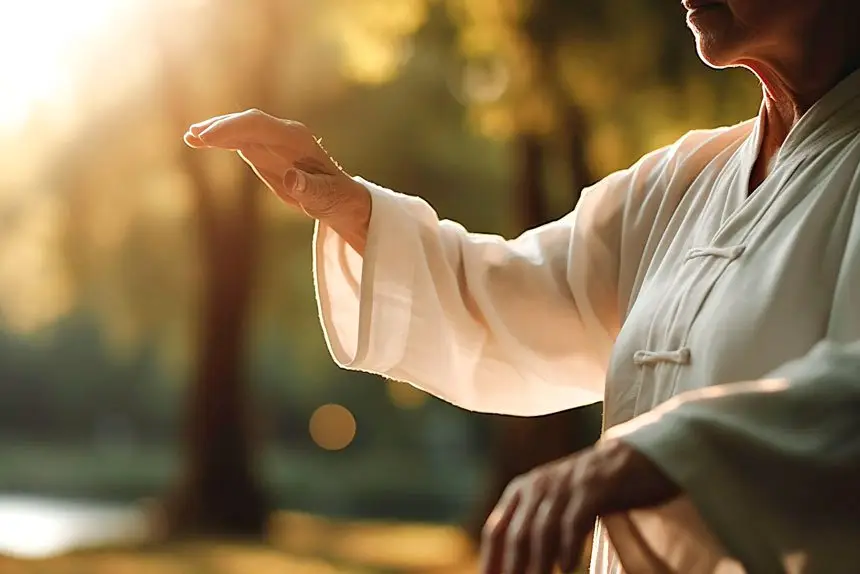
Poses in tai chi can be modified to suit people with a range of abilities. People found benefits from participating in these recreation activities. Benefits included improvements in walking, balance and quality of life, and reductions in fatigue, depression and anxiety.
Dance was particularly beneficial for improving walking. Tai chi, yoga, dance and water exercise were beneficial for balance. Yoga and water exercise were beneficial for fatigue and tai chi for depression.
CONSIDERATIONS FOR PHYSICAL RECREATION IN THE COMMUNITY
Some people with disabilities prefer to be active with others who have similar conditions and abilities.
Others prefer to be active locally with family and friends.
Travel to a disability-specific activity may increase the cost and time involved. The lack of choice puts people with a disability at a disadvantage compared to non-disabled people. Some physical recreation activities included in the review used adjustments and extra equipment to be suitable for people with disability. These adjustments were usually only small (for example, seated options or spending a shorter time in a certain pose or position) and equipment was low cost (for chairs, exercise bands, and so on).
Most local community-based recreation groups should be able make simple adjustments to meet the needs of people living with mild to moderate disability. However this doesn’t routinely happen.
In the review, few activity leaders (37%) had experience and/or training working with people with disability. This may limit the confidence of the activity leader to include a person with disability in the class. It may also limit the confidence of the person with disability to join a local class.
ACCESS TO SERVICES IS A BASIC RIGHT
Australia is a signatory on the Convention on the Rights of Persons with Disabilities. Australia also has a Disability Discrimination Act (1992). But this seems to provide little incentive for services to take active measures to prevent disability discrimination. People with disability often face greater costs, more travel and fewer choices for physical activity. The commission’s final report recommended strengthening laws to protect people with disability, prevent discrimination, and build a more inclusive society. Momentum and expectation is growing in Australian society for better inclusion for people living with disability.
WHAT CAN WE DO FOR BETTER PHYSICAL ACTIVITY INCLUSION?
First, more physical activity options suitable for people with disability are needed in the community.
Guided by the inclusion spectrum, there should be options for both disability-specific and inclusive mainstream activities. People with disability will then be able to choose an activity that suits.
A handful of organisations are leading the way, often led by a person with disability or disability advocate, but more are needed.
Second, community-based physical activities need to enable the person with disability to access the setting safely and have equipment suitable to use. Community organisations can audit their service using online tools, such as AIMFREE (Accessibility Instruments Measuring Fitness and Recreation Environments), to evaluate and improve their accessibility.
A welcoming environment can help ensure a positive experience for the person with disability. Disability Sports Australia offers a free online Accessibility Champion course for sporting clubs and recreation providers. All clubs and service providers should commit to completing this type of training.