

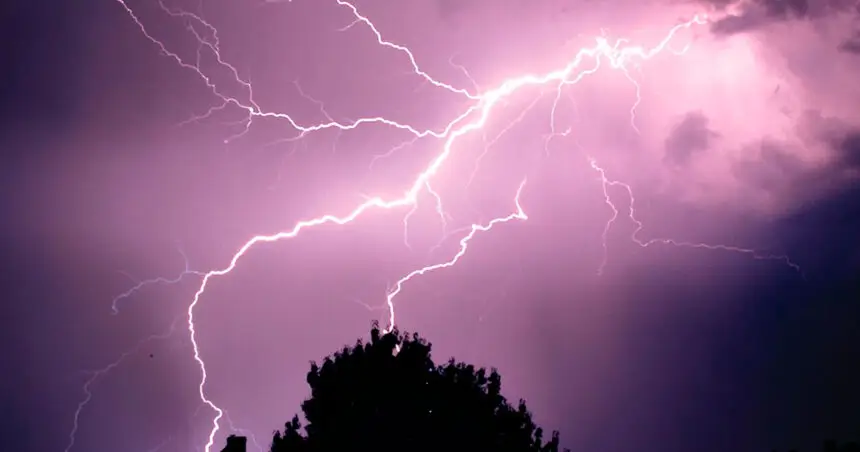
Anyone who has lived through a South East Queensland summer knows the pattern.
A still, sticky afternoon, the sky turns dark in the west, and minutes later the yard is full of leaves, branches and an upturned pot.
November and December usually bring the worst of it, so get ready now.
Start overhead. Check every tree near the house and fence for dead wood, cracked limbs and branches rubbing together, because those come down first.

Cut them just outside the swollen collar where branch meets trunk. Never lop the top off a tree, because the regrowth is weakly attached and snaps easily.
Leave anything big or near power lines to a qualified arborist, and ask your council before removing a large tree.
Young trees need a hand. Drive in two hardwood stakes either side, outside the root ball, and tie the trunk loosely with soft ties in a figure eight.
Let it sway a little, because that movement builds a strong trunk. Take the stakes out after about a year.
Then think about water. Plenty of local yards are heavy clay, where roots left standing in water rot and lose their grip.
Clear the gutters, check downpipes do not empty into a garden bed, and plant on a slight mound rather than in a hollow.
Lift pots onto feet and out of saucers, and when a storm warning comes, take down hanging baskets and lay tall pots on their side.
Planting now? Choose plants that grew up in the wind.
Tuckeroo, coast banksia, sheoaks and tea trees are local natives that handle strong wind well.
After a storm, stay well clear of fallen power lines and report them to Energex.
Isaac Olson is a director of Nursery Near Me, an Australian online nursery that delivers to Ipswich, Logan and the Redlands, at nurserynearme.com.au.