
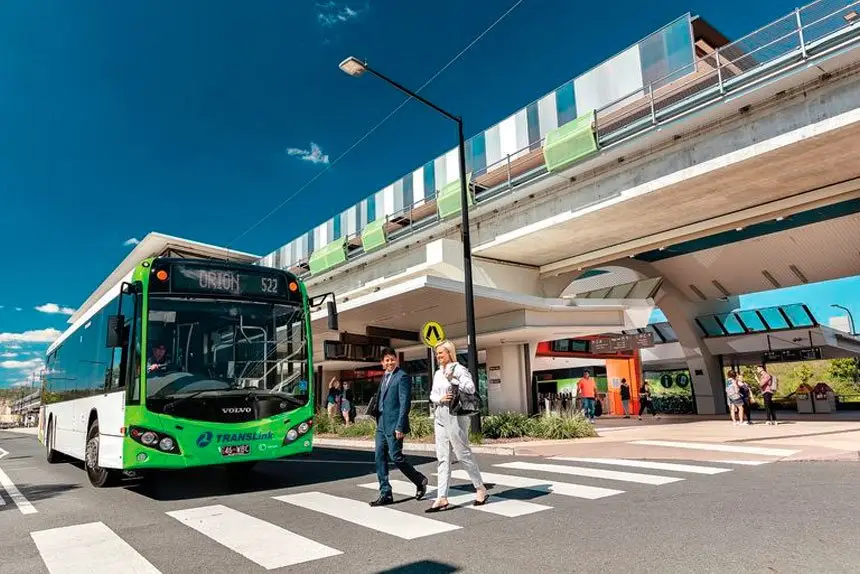
THE Ipswich to Springfield rail corridor and a high frequency bus network have been identified as vital services needed to beat future gridlock in the city’s major transport strategy handed down last week.
In a bleak forecast for the city, the iGO Ipswich Transport Strategy 2025 states “current issues such as congestion can only be expected to worsen”.
It said this would be the case “even if all currently known infrastructure and services in planning across local and state government are delivered”.
iGO forecasts that the I2S rail link and superior bus network would attract an additional 35,000 daily public transport trips.

The result of three years of research and detailed planning investigations, iGO was handed to Ipswich City Council at last Thursday’s meeting.
The strategy is a major update on the previous iGO strategy, released in 2016.
When the initial strategy was released, Ipswich had a population of 190,000, and the Queensland Government had forecast a population for Ipswich to 435,000 people by 2031.
The State Government has since lifted urban targets, taking Ipswich’s current population of 251,1503 to more than double by 2046 to a projected population of 533,800.
That would bring an associated increase of 61,000 jobs from 2026 to 2046,
Most of the residential growth – 75 per cent – is projected to occur predominantly in the form of low-density detached housing in greenfield areas, resulting in a 133 per cent increase in the number of weekday trips generated across the Ipswich region, between 2019 and 2046.
This is forecast to be accompanied by an increase in heavy vehicles trips of 145 per cent.
The Covid pandemic, working from home arrangements and evolving transport technology such as vehicle automation also resulted in a number of social and economic impacts and shifts on transport needs.
iGO identifies a shift towards:
- more sustainable travel, enhancing the passenger transport network, improving local footpath and active transport networks;
- changing travel behaviour and managing travel demand, encouraging and incentivising travel outside of peak times; supporting flexible workers who choose to work at home or in their local area, shifting short-medium range trips from car to sustainable modes and
- supporting complete neighbourhoods and encouraging growth near transit and existing infrastructure and creating activity centres;
- address needs of people with disabilities and enhance perceptions of safety and address road safety; and
- protect the environment and create a more resilient network for future generations.
Ipswich Mayor Teresa Harding said the strategy highlighted opportunities for a better Ipswich transport network, with a sharper focus on more active and public transport as well as expanding and increasing the resilience of the city’s network of roads.
“Nine years ago, 84.5 per cent of trips in Ipswich were made by car,” Mayor Harding said.
“That figure hasn’t really changed, highlighting the need to refocus our efforts for more sustainable, efficient and affordable transport methods and leveraging the advantages of new transport technologies where appropriate.”
She said the need to collaborate with other levels of government for increased investment in public transport in Ipswich was urgent.
“We are in urgent need of the delivery of the proposed Ipswich Central to Springfield Central Public Transport Corridor.
“We also need other traffic-busting initiatives such as further development of the local bus network beyond current State Government commitments.”