

IT’S time to get healthy for summer!
To help, the Heart Foundation provides a practical way to engage in fresh new eating habits.
Its recommended eating pattern is based on a combination of foods, chosen regularly, over time. It includes a wide variety of foods, is rich in wholegrains, fibre, vitamins, minerals and healthy fats, and naturally low in unhealthy fats, salt and added sugar.
Eating this way can help improve heart health and lower your risk of developing heart disease by reducing risks like high blood pressure and high cholesterol.

Small changes can make a big impact. Follow the Heart Foundation’s 5-step heart-healthy eating pattern to help you achieve this balance:
- Eat plenty of vegetables, fruit and wholegrains
Choose a variety of fruit and vegetables. These foods contain lots of vitamins and minerals, fibre and antioxidants, and have been shown to reduce heart disease risk. Wholegrain foods like brown rice, wholemeal pasta, grainy bread and oats, are high in fibre and can help lower your cholesterol. - Include a variety of healthy protein-rich foods
The best options are plant-based proteins like legumes, nuts and seeds, as well as fish and seafood. Include smaller amounts of eggs and lean poultry and limit lean red meat to 1-3 times a week. - Choose unflavoured milk, yoghurt and cheese
These foods don’t increase or decrease your risk of heart disease, but can be an important source of calcium, protein, and other minerals. Unflavoured varieties with no added sugar are the healthiest options. If you have heart disease or high cholesterol, choose reduced-fat varieties. For those who don’t, you can choose between reduced-fat or full-fat options. - Include healthy fats and oils
Choose foods with high amounts of healthy fats like avocados, olives, nuts and seeds, and use healthy oils for cooking, like olive, canola, sunflower, peanut and soybean oil. These foods can help lower your cholesterol. If you eat fish, try to have it 2-3 times a week to benefit from heart-healthy omega-
3 fats, which help lower triglycerides in the blood and reduce the risk of irregular heartbeats. - Use herbs and spices to flavour foods instead of salt
Eating too much salt can lead to high blood pressure, which is a risk factor for heart disease. On average, Australians eat nearly double the recommended maximum of five grams of salt each day, mainly from processed and packaged foods like canned foods, deli meats and baked goods. The easiest way to reduce salt is to choose fresh, unprocessed foods like fruits and vegetables, and flavour meals with herbs and spices. Reading food labels can help you make healthier choices when choosing packaged foods.
Source: https://www.heartfoundation.org.au
HEART HEALTHY RECIPE
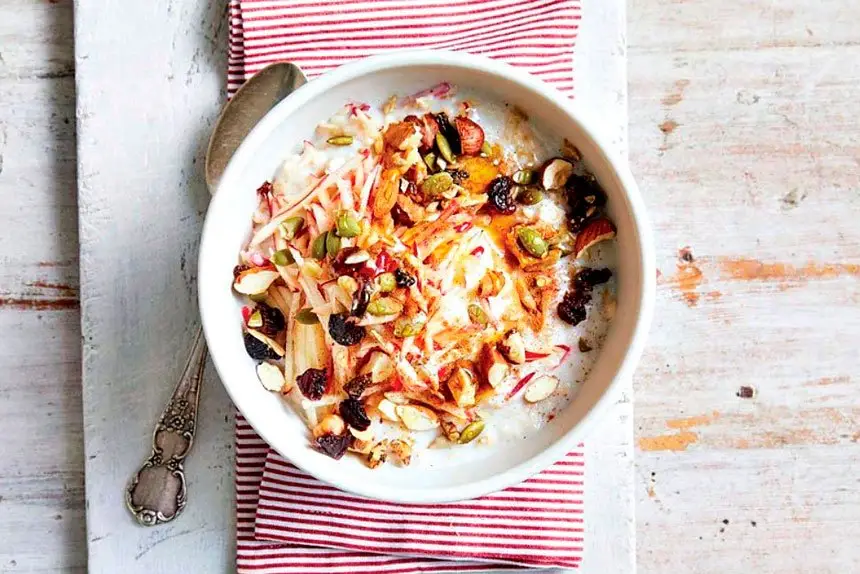
Apple and honey nut crumble oats
2 serves; 10min prep; 5min cook
Ingredients
- 1 quantity of cooked traditional rolled oats
- Pinch ground cinnamon, plus extra to serve
- 1 large apple, grated
- 30g raw nut and seed mix
- 2 tablespoons chopped raisins
- 2 tablespoons plain Greek yoghurt
- 1 tablespoon honey
Method
Step 1
Cook hot oats following method in base recipe, adding cinnamon and half the grated apple to the saucepan with oats and milk.
Step 2
To serve, divide oats between 2 bowls. Top with remaining apple, nut and seed mix, raisins and yoghurt. Drizzle with honey. Sprinkle with extra cinnamon.
Tips
- Use your favourite variety of apple.
- Raisins can be replaced with any type of dried fruit. Try sultanas or diced, dried apricots for a change.
- Nut and seed mixes are available from supermarkets and greengrocers.