

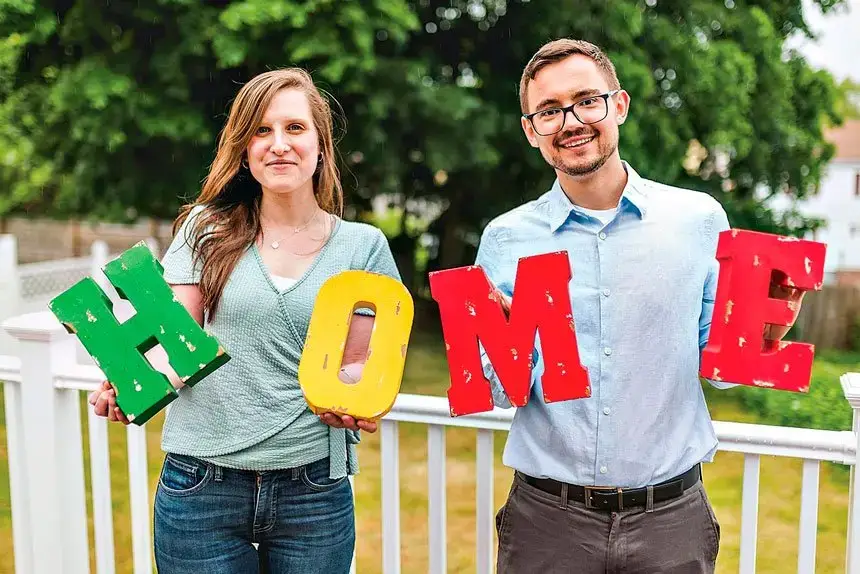
FOR younger generations, achieving the traditional “Australian dream” of owning a home is becoming increasingly difficult.
Census data shows ownership rates among 30 to 34-year-olds have dropped from 64% in 1971 to 50% in 2021, and from 50% to 36% for 25 to 29-year-olds.
Faced with rising prices and stagnant wages, some buyers are finding creative – and sometimes unconventional – ways to enter the market.
BUYING WITH A SIBLING OR FRIEND
While most first-home buyers purchase with a partner as joint tenants, some are now buying as tenants in common – often with siblings or friends.

This arrangement allows unequal ownership shares and no automatic inheritance rights.
A recent industry survey found 5.7% of buyers purchased with a sibling, 4% with a friend, and 2.1% with an extended family member. For Sophia, who bought an investment property with her twin sister at 25, the partnership worked well – until both entered new relationships.
When her sister wanted to move into the shared property and pay rent, tensions arose over setting fair rent increases.
The experience highlighted that while co-buying can open doors, it also brings emotional and financial complexities.
THE RISE OF RENTVESTING
Another growing strategy is rentvesting – buying an investment property while continuing to rent elsewhere. In 2024, rentvestors made up 6.85% of first-home buyers.
For example, Sydney-based Madeline bought an investment property in Western Australia after finding local prices out of reach.
Living in her partner’s property insulated her from rental insecurity, but for many, juggling a mortgage and rent can be financially challenging.
CREATIVE WAYS TO SAVE
Others are finding alternative ways to save a deposit. Genevieve, a 29-year-old migrant from France, spent over two years house-sitting through an app, saving enough to buy an apartment.
Although it accelerated her savings, she described the experience as “basically being homeless,” highlighting the precarity behind such sacrifices.
These strategies while innovative, are not solutions to the broader structural barriers preventing fair and affordable housing access in Australia.
All participant names are pseudonyms to protect privacy.
Source: Extracts from Theconversation.com.au.
Author Julia Cook, published 9 October 2025.