
KOALA numbers are on the decrease in the Ipswich region according to Council’s latest surveys.
Stronghold populations currently remain in the urban centre, near the Redbank Rifle Range and surrounding parks and reserves through to Springfield, and in rural areas within Ipswich including Purga Nature Reserve and parks and reserves in the Walloon to Thagoona area.
Council has established the new Paynes Road Reserve in Willowbank through Ti Tree funding and has been awarded $293,000 in grant funding for the management of threats to koalas through the Healthy Land and Water Koala Threat Management Initiative and the Restore and Reconnect programs.
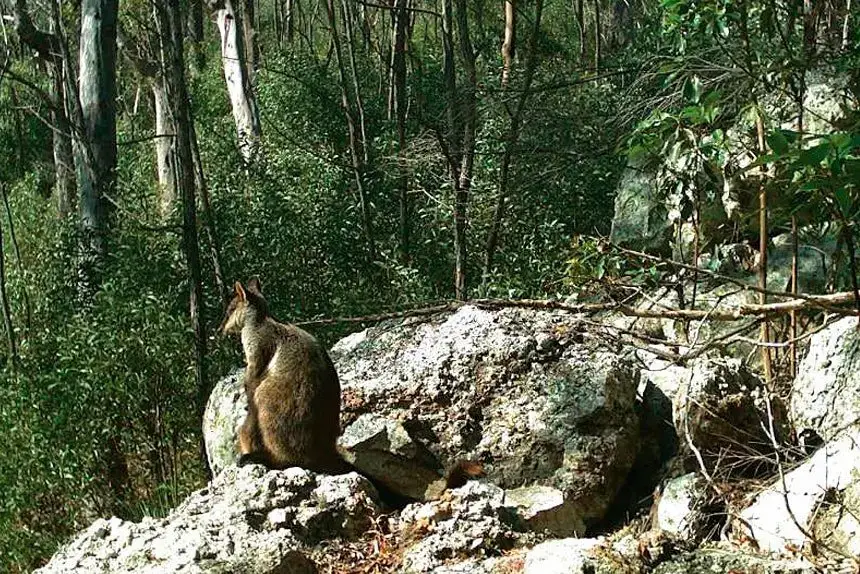
The Council adopted a Koala Conservation and Habitat Management Plan in 2016, a Brush-tailed Rock Wallaby Recovery Plan in 2017, Platypus Recovery Plan in 2020 and Flying Fox Roost Management Plan in 2024.

Despite Council’s efforts, the bad news with koala numbers came with further bad news for threatened wildlife in the region reported in the Council’s Ipswich Priority Species Update Report handed down to its Environment and Sustainability Committee.
As rapid clearing to accommodate housing in the western corridor continues, the koala, platypus, brush-tailed rock wallaby and flying-foxes all face a range of threats and risks that have seen their conservation status elevated over the past two decades.
In the past decade, the Federal Government has uplisted the koala from vulnerable to endangered and the brush-tailed rock wallaby has been uplisted from least concern to vulnerable.
Brush-tailed rock wallaby habitat restoration and weed management was conducted last financial year through Council’s conservation works program.
A formal nomination to list the platypus as vulnerable in 2022 was rejected on the grounds of insufficient data.
With widespread concerns for its decline, conservation organisations have been working with Ipswich City Council to increased efforts to conduct population monitoring to support the species listing.
Of the three species of flying-fox found in Ipswich, only the grey-headed flying fox is listed as vulnerable at a national level.
The report to Council stated that the need to manage flying-foxes continued to have impacts, as rural and peri-urban habitat loss caused an increase in the number of urban flying-fox roosts in the past decade, increasing human-wildlife conflict.
The report documented significant advances in platypus monitoring in the region, with a new survey approach used last financial year focusing on intensive monitoring of key waterways where platypus environmental DNA detections had been high.
Erosion, pollution and sedimentation issues were continuing in Ipswich’s waterways, particularly in Woogaroo Creek, the report stated.
There were no detections in the previous stronghold for platypus, Woogaroo Creek.
The report pointed to intensive development deteriorating waterway health.