

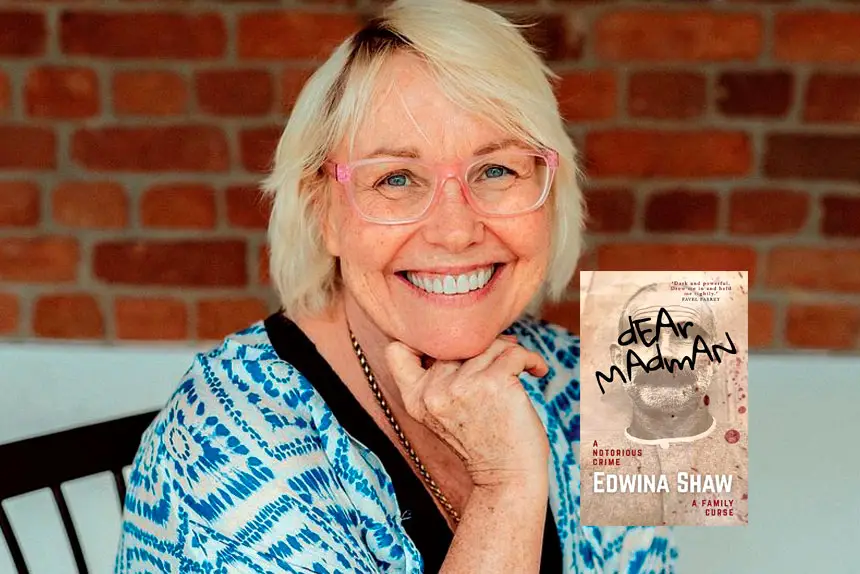
A century-old crime that shook the Lockyer Valley and haunted one Queensland family for generations has been brought back into the light in a powerful new book by local author Edwina Shaw.
Shaw’s latest work, Dear Madman, is deeply personal – revisiting the 1912 killing of her great-aunt, a case remembered in historical records as the Lockrose Tragedy.
For Shaw, the story began when she was just seven years old.
“My nana first told me the story of the murder of her sister when I was a child,” she said.

“I’ve carried that story my whole life.”
Her great-aunt was a young girl living with her family on a farm near Lockrose, between Laidley and Forest Hill.
One morning in 1912, she was sent out to a paddock to tend the cows, but she never returned. Her body was later discovered, sending shockwaves through the tight-knit rural community.
Suspicion quickly fell on a travelling labourer working under the name Charles Davis, who was later identified as Joseph Frisby.
“The whole community was up in arms and determined to catch him,” Shaw said.
“He killed the girl in the morning and they found him later that same day.”
The crime occurred only a few years after the still-unsolved Gatton murders, a brutal triple killing that had already heightened fears across the region.
For Shaw’s family, the tragedy became something rarely spoken about.
“My nana’s family were completely shattered,” Shaw said.
“They lived in fear that he would escape and come back. But they also carried the shame of being the family where a child had been murdered.
“My nana told the girls in the family when we were young.
“The boys weren’t told. I realise now she was warning us to be careful.”
For decades, even the name of the killer was rarely spoken. It was not until Shaw was an adult that another great-aunt finally revealed it.
“Once I had the name, it opened the door to the research,” she said.
That research eventually uncovered a haunting photograph taken years after the crime, when Frisby had been transferred from Goodna Prison to the criminally insane ward at the former Sandy Gallop Asylum.
The image now appears on the cover of the book.
Originally intended as a memoir, the project evolved as Shaw began writing.
“When I sat down to write, the murderer’s voice came through very strongly in the first person,” she said. “But it was important to me to bring the children back to life on the page, especially the girl who was killed.”
The finished work blends memoir, historical reconstruction and fiction to explore how violence and grief can echo through families long after the original crime.
For Shaw, completing the book brought a sense of release.
“I’ve been haunted by this story since I was seven,” she said.
“When I finally held the finished book in my hands and put it down, I realised it was gone. I was free.
“Burying things doesn’t make them go away. It’s only by telling the story that you reduce its power.”