

Drive.com
Chinese automotive giant BYD has set its sights on becoming one of Australia’s three best-selling vehicle brands by the end of 2026, as strong demand and an expanding model line-up continue to drive rapid growth across the country.
Currently ranked fifth nationally behind Toyota, Mazda, Kia and Ford, BYD has already demonstrated its growing market strength by finishing third in March and second in April sales rankings.
BYD Australia chief operating officer Stephen Collins said the company remained on track to achieve its ambitious target.

“We want to be around the Top Three by the end of this year. We’re tracking pretty well thus far,” Mr Collins told Drive.
The manufacturer expects to reach approximately 50,000 vehicle sales by the end of June, placing it within striking distance of matching its entire sales volume from the previous year in just six months.
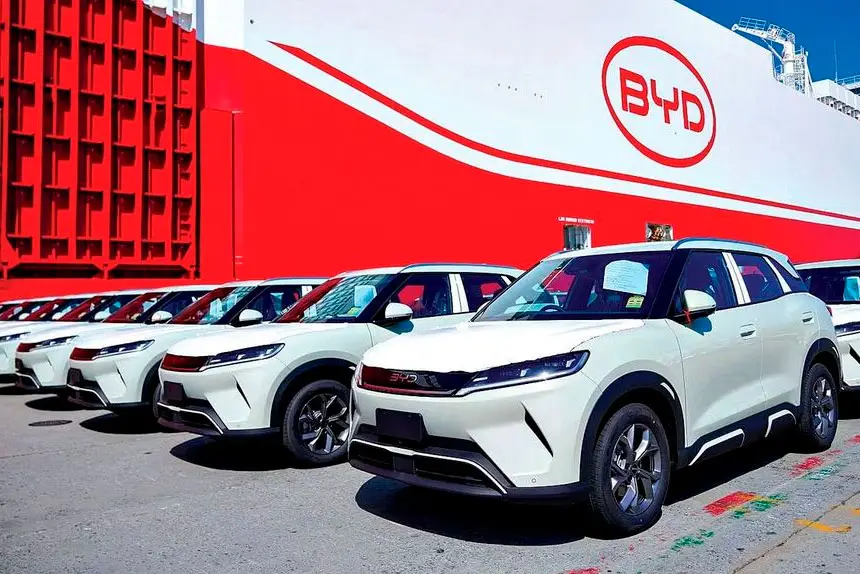
A significant boost to those figures was expected from the arrival of the BYD Zhengzhou, a company-owned vehicle carrier scheduled to dock in Melbourne on June 2.
According to the company, every vehicle aboard the vessel has already been sold.
The shipment forms part of a larger delivery program that will see around 30,000 vehicles arrive in Australia during May and June, roughly three times the company’s usual import volume.
To secure a place among Australia’s top three brands, BYD will likely need annual sales exceeding the figures recorded by Mazda and Ford in 2025, when the brands sold approximately 92,000 and 94,000 vehicles respectively.
The company’s momentum has been remarkable. BYD delivered 7702 vehicles in April alone, representing a 140 per cent increase compared with the same period last year. Based on current trends, the brand could approach 90,000 vehicle deliveries in Australia during 2026.
Despite the strong growth, Collins said the company was focused on sustainable expansion rather than becoming fixated on sales rankings.
“There are a lot of external factors that could influence the market,” he said, pointing to global economic uncertainty, rising interest rates and ongoing tensions in the Middle East.
The company also reported a temporary spike in electric vehicle demand earlier this year as fuel prices rose following geopolitical tensions in the Middle East.