
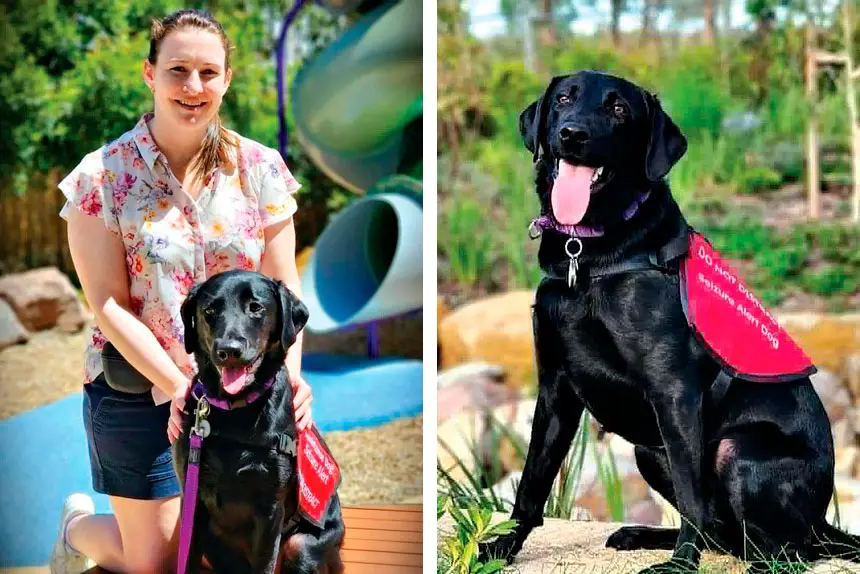
WHEN black labrador Nina began barking and nudging her owner, Dani Stevens late one March evening,
she wasn’t asking for attention, she was trying to save a life.
Moments later, Ipswich woman Ms Stevens collapsed into a tonic-clonic epileptic seizure that progressed to respiratory arrest, forcing her mother, Kerri, to perform chest compressions until paramedics arrived.
The frightening ordeal is one Ms Stevens believes could have ended very differently without her highly trained assistance dog.
As Australia marks National Assistance Dog Week, she is sharing her story in the hope more people understand the life-saving role assistance dogs play and why something as simple as patting a working dog can have dangerous consequences.

“It was one of the most frightening experiences of our lives,” Ms Stevens’ said.
“Nina’s alert gave us precious time to prepare and likely made a life-saving difference.”
Ms Stevens lives with refractory epilepsy, a form of epilepsy where seizures cannot be fully controlled with medication.
While Nina cannot stop a seizure from happening, she is trained to recognise subtle behavioural and physiological changes before one strikes, giving her owner vital warning to get help and move to safety.
“She’s (Nina) a medical aid,” Ms Stevens said.
“She has given me back parts of my life that epilepsy had taken away. She gives me the confidence to leave the house, participate in my community and live more independently.
“She doesn’t take my epilepsy away, but she gives me the confidence to live alongside it instead of letting it define every decision I make.”
Despite the critical role assistance dogs play, Ms Stevens said many Australians still did not understand how easily they could interfere with that work.
“Assistance dogs are working dogs,” she said. “Touching them, talking to them or trying to get their attention can distract them from doing their job.
“If someone distracts Nina, she could miss one of her seizure pre-alerts.
“Without that warning, I could have a seizure with no time to prepare, which could result in a serious fall or injury.
“Those few seconds can make all the difference.”
Her message is extremely simple: Respect the Vest.
“If you see an assistance dog, don’t touch it, don’t talk to it and don’t make eye contact with it,” she said.
“If you need to interact, speak to the handler, not the dog. By ignoring the dog, you’re actually helping it protect someone’s life.”
Despite legal protections under the Disability Discrimination Act and Queensland legislation, Ms Stevens said access issues remained a frustrating reality.
“We still experience businesses refusing entry or questioning us, so we’re constantly having to advocate and educate,” she said.
Looking back on her own journey, Ms Stevens cannot imagine where she would be without Nina.
“Without her I’d have far less confidence and independence,” she said.
“She hasn’t just changed my life – she’s helped me get my life back.”