
SEPTEMBER is National Biodiversity Month, so I’ll be bringing you a series of articles highlighting Australia’s biodiversity and the mistakes we’ve made in our past that have led to many conservation tragedies.
Three key dates in September are National Wattle Day on September 1 (see article below), National Threatened Species Day on September 7 and World Cassowary Day on September 26.
The reason why September 7 has been chosen as Threatened Species Day is poignant.
This is the anniversary of the death of the last known thylacine in Hobart Zoo, exactly 90 years ago this year. The thylacine (Thylacinus cynocephalus) was an iconic Australian animal, endemic to Tasmania, but was hunted to extinction after European settlement in 1788.

Thylacines are commonly called Tasmanian tigers, although they are also colloquially referred to as marsupial wolves and Tasmanian wolves.
Thylacines were once widespread across Australia, with fossil evidence of their existence in Victoria, South Australia, Western Australia and Queensland.
However, they died out when dingoes arrived in the continent between 5000 and 10,000 years ago. Being lone predators with solitary behaviour, thylacines were unable to compete with dingoes, which hunt in packs.
However, dingoes didn’t cross Bass Strait to reach Tasmania, where the thylacine survived until European settlement.
The reason why thylacines were ruthlessly hunted during the 1800s was because of a belief that they were sheep killers.
This was probably a fallacy, because modern scientific research has revealed that the size, anatomy and hunting behaviour of thylacines had evolved for small prey, making it unlikely that they were a significant cause of sheep losses. Scientists believe that the thylacine’s jaw anatomy would not have provided sufficient strength for killing sheep.
Accusations of thylacines killing livestock may have been based on settlers finding thylacines scavenging on dead sheep killed by other predators, such as wild dogs.
At least 100 Australian endemic species have become extinct (or extinct in the wild) since the nation’s colonisation by Europeans in 1788. The list includes 34 mammals, nine birds, four frogs, three reptiles and 38 plants. However, this is only the known number. The actual number of Australian extinctions is likely to be far more than those recognised in official lists.
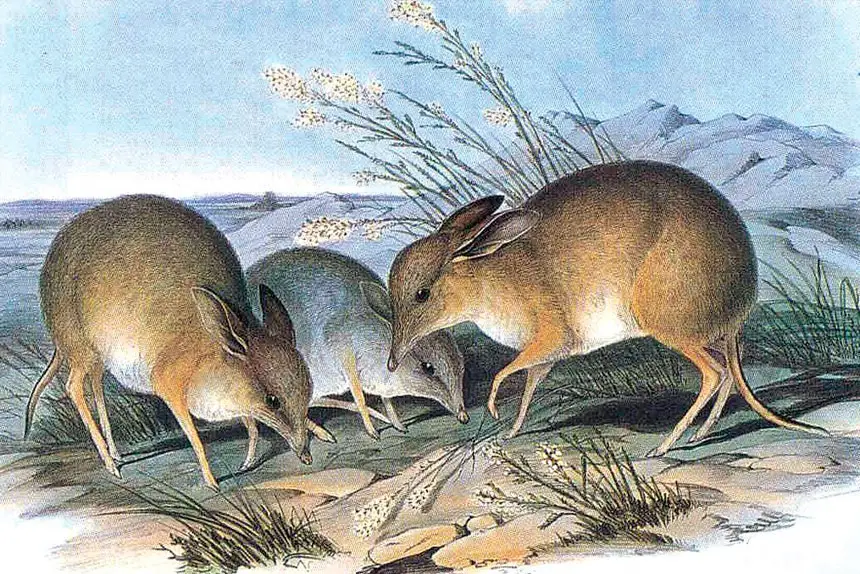
Examples of animal species that have become extinct in Australia are the pig-footed bandicoot, desert rat-kangaroo, lesser bilby, toolache wallaby, southern gastric-brooding frog, broadfaced potoroo, King Island emu, paradise parrot and Bramble Cay mosaic-tailed rat.
Mammals have suffered the highest proportional rate of extinctions, with the continent having lost over 10 per cent of the endemic mammal species.
Australia’s mammal extinction record is the highest in the world, with the continent accounting for about 6 to 10 per cent of the world’s post-1500 known extinctions.
Biodiversity Month highlights the importance of all life forms, including plants, animals, fungi, microorganisms and the ecosystems they inhabit. It emphasises the essential role biodiversity plays in human survival, providing food, clean air, water, shelter, medicines and materials, while also supporting health, wellbeing, and the economy.
There are a considerable number of rare and threatened species in the Ipswich environs.
The Queensland Department of the Environment, Tourism, Science and Innovation records eight species of mammals, over 20 birds, three species of reptiles and 26 species of plants that live in our local area.