

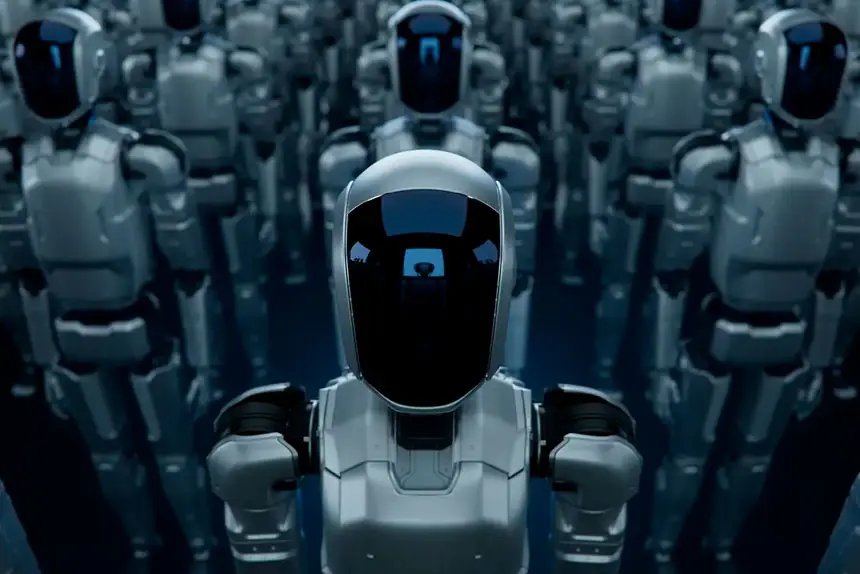
LAST week we talked about how the world will gradually change with the advent of AI in our lives.
“Artificial intelligence” or AI is gradually being incorporated in making robots think for themselves, scary though it may be. There are some, that are right at this moment helping us to do things, things that we often find a challenge to do.
There are robots capable of lifting patients off beds in hospitals or nursing homes, ones that can lead an exercise group.
Some to lift a large patient off the floor by ambulance staff.

Companion robots, such as Abby, are designed to combat loneliness and to provide stimulation for ageing populations.
Toy puppies and seals, which respond to touch and feel, are used in nursing homes to provide comfort and support to those with dementia.
And there are other robots who can carry conversations and interact with groups.
Walking dogs, once seen in some futuristic movies, are now used in many industries as gophers and in aged care homes as help to elderly patients to carry items.
They are currently being used in the military now in different ways to save lives.
There are robots being designed for daily care, washing, watering plants etc.
In the future there will be many elderly care robots. Companion robots, designed for specific uses. There is even an Australian- developed humanoid that sings, dances and practices Tai Chi.
There will be service and assistance robots to assist with daily living issues, and others with the ability to detect falls and monitor for changes in health conditions.
It’s a little scary when we see these robots with AI do things that once was the sole domain of humans.
It’s believed that by 2260, one in six people world-wide will be over 65 years of age, meaning that maybe in Australia we will see more robots of different types assisting us in many ways.