Annette’s journey with Lewy Body Dementia – from independence to daily struggles
By Melissa Meehan
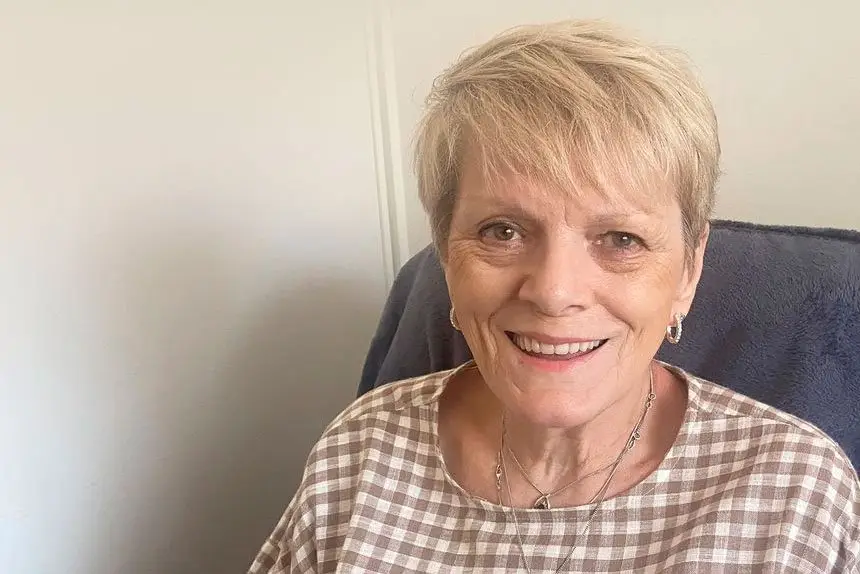
Two years ago, Annette was running a thriving small business and planning her next solo holiday.
Today she’s mostly confined to her aged care facility, unable to go out unchaperoned.
She can no longer trust her legs to keep her upright, relying on a four-wheel walker or sometimes a wheelchair to move around. Her ability to swallow her favourite foods is gone, she cannot control her body temperature or blood pressure.
When she is tired, her body slumps and her speech is slow and slurred.
Annette’s memory is pretty good for the most part. She recognises the faces of loved ones and can hold a conversation. But sometimes she talks to people who aren’t there.
Such is the rollercoaster of a Lewy body dementia diagnosis for Annette, one of 100,000 Australians living with the condition that affects memory, thinking and bodily functions.
For members of Annette’s family, a rollercoaster is the only way to describe it.
Some days she seems really well, like she was before she got sick. Other days she experiences hallucinations, cognitive decline, a range of movement issues and other symptoms that make the condition so challenging.
But those good times can change in a moment, and Annette can go from walking and talking to a frail, confused version of herself.
“It (the diagnosis) has been difficult to get my head around, because most days I feel good and I don’t remember the bad days.” she said.
“But I also understand that I am not well, and it’s a constantly changing beast. It’s a horrible diagnosis and I’m just trying to live my life the best I can, while I can.”
To everyone that knows her, it’s understandable that Annette sometimes feels like a prisoner.
In 2023, she took herself on solo trip to Tasmania and Queensland after closing her local business a year earlier.
But over the course of 2024, she suffered as many as eight strokes, more than 20 mini-strokes and spent much of the year in hospital. In November she was diagnosed with Lewy body dementia, and the symptoms came on thick and fast.
Lying in a hospital bed after another stroke, Annette lost strength in her left side, was unable to move her left leg and spoke to people who weren’t there.
Months later, her neurologist marvelled at her recovery and said he had not expected her to leave the hospital alive.
Lewy bodies are a protein that attack and then eat away at the brain, affecting memory, thinking, behaviour and bodily functions.
The prognosis isn’t great for those diagnosed. Life expectancy is about seven years, and many die earlier from infection, falls or other illness.
It is not as well known as Alzheimer’s disease, but more than 100,000 Australians live with it, according to Dementia Australia.
– Journalist Melissa Meehan is Annette’s daughter.