

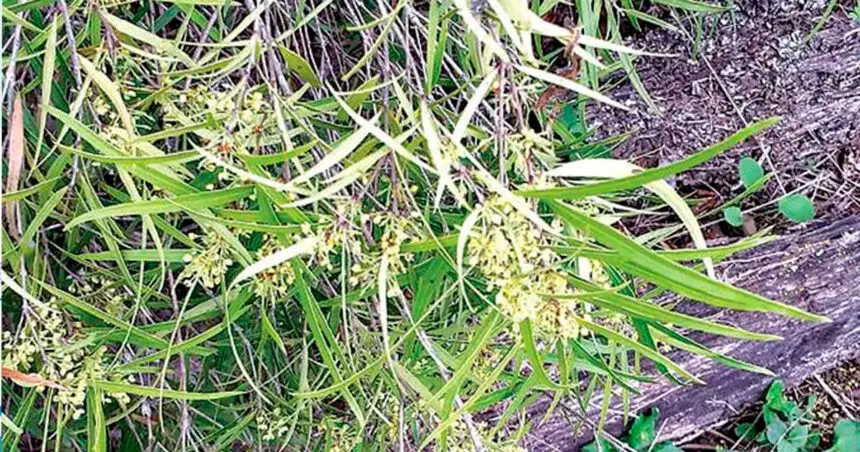
WE all know that Australia’s fauna and flora are unique and special.
However, most people don’t generally appreciate its huge commercial worth, and this is especially the case with plants and fungi.
Our continent has a huge number of plants that live in very harsh conditions, in all sorts of adverse environments. To survive in these ecosystems, they have developed an enormous range of adaptations, both externally and in their internal biochemistry.
The biochemistry of plants is a vast subject and there is so much we still don’t know. Fungal biochemistry is even more mysterious. Plants and fungi represent a massive unknown biochemical reservoir which is still only partly explored.

It’s a bit like the biological equivalent of the Mariana Trench. You don’t know what’s hidden in it until you go there.
In short, Australians should not only value our botanical biodiversity for its environmental importance, but also because it has a huge, unknown economic value.
First Nations peoples around the world have always used plants for medicinal purposes. In recent years, medical science is increasingly researching the chemicals in plants as they seek ways of treating new diseases, caused by an ever-evolving array of viruses and bacteria.
Two new academic fields that have arisen in this endeavour are bioprospecting and ethnopharmacology.
Bioprospecting is exactly how it sounds. It’s similar in concept to gold prospecting, but scientists are searching for new biochemical compounds for use in medicines, biofuels, agriculture and even industrial manufacturing.
Ethnopharmacology research explores the traditional use of plants, fungi and other natural resources in traditional medical systems and evaluates their potential value in modern science.
Australia’s botanical and fungal gene bank is like a vast landscape that still requires considerable exploration.
We must do everything possible to preserve it, for our sake as well as the environment.