Local Ipswich NewsLocal Ipswich NewsLocal Ipswich News
  • Home
  • News & Editorials
    • Community
    • Ipswich Arts
    • Local Seniors
    • Local Defence
    • Sport
    • Business
  • Ipswich Events
  • Read Online
  • Pickup Locations
  • Contact Us
Search
Reading: A rare discovery in Texas national park
Share
Font ResizerAa
Font ResizerAa
Local Ipswich NewsLocal Ipswich News
  • News & Editorial
  • Community News
  • Local Seniors
  • Local Business
  • Ipswich Events & Arts
  • Sport
  • Local Defence
Search
  • Home
  • Read Online
  • Pickup Locations
  • Get Home Delivery
  • Home
  • News & Editorial
Copyright © 2023 Local News Group | Local Ipswich News | Ipswich Local Magazine | Logan Local Magazine
Website by Local News Group Digital
Local Ipswich News > Blog > The Lazy Gardener > A rare discovery in Texas national park
The Lazy Gardener

A rare discovery in Texas national park

John Wilson
John Wilson
Published: March 27, 2025
Share
A photographer’s keen eye captures a brand-new plant species, marking a groundbreaking botanical find.
SHARE

Many people assume that national parks worldwide have thoroughly documented all the plants and wildlife within their boundaries.

However, a surprising discovery in Big Bend National Park, Texas, proves that nature still holds secrets.

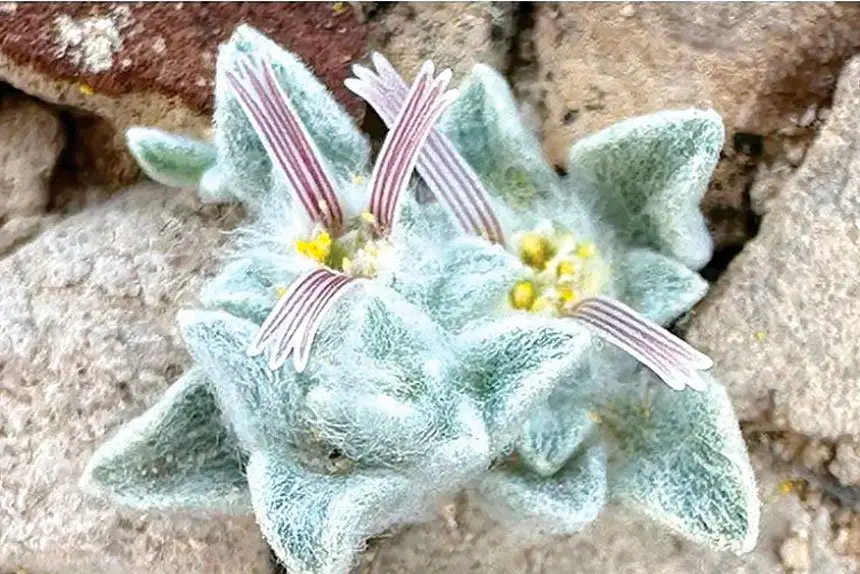
While exploring this remote and rugged desert landscape, a photographer spotted a strikingly colourful plant emerging from the beige and brown terrain.

Unbeknown to her at the time, she had just captured an entirely new species – one previously unknown to researchers.

- Advertisement -

This plant is not only a new species but also belongs to an entirely new genus, a classification above species that groups organisms with shared characteristics.

Due to its dense, fur-like fibres covering its leaves and its red-and-white flowers, some have nicknamed it the “woolly devil”.

According to researchers, this fuzzy plant belongs to the sunflower family but is distinct enough to warrant its own genus.

It appears to thrive in the rocky, arid terrain of a narrow range within the park, making it particularly sensitive to weather changes.

Similar to the Wollemi pine tree in New South Wales, the exact location of the woolly devil remains undisclosed to protect it from harm.

Despite being newly discovered, the species may already be at risk due to the increasingly harsh worldwide climate.

Scientists continue to study plants like this in hopes of uncovering medical breakthroughs, including potential treatments for diseases such as cancer.

Until next time!

Use your grass clippings wisely
Cucumbers provide delicious variety
Pineapples: the wait is worth it
Fake grass proves not so green
This story of ingenuity will leave a pleasant taste in your mouth
Share This Article
Facebook Email Print
Previous Article An April rate cut is most likely off the cards, despite a surprise fall in jobs. PHOTO: Joel Carrett/AAP PHOTOS Why shock drop in jobs won’t shift RBA rates without other factors
Next Article Memory Bites with Matt Moran Brings Food and Stories to Life Memory Bites with Matt Moran
Copyright © 2024 Local News Group - Website by LNG Digital
Welcome Back!

Sign in to your account

Username or Email Address
Password

Lost your password?