
The Conversation
FOR more than 70 years, space agencies have searched for the “perfect” astronaut.
The formula seemed simple: exceptional physical fitness, military discipline, razor-sharp reflexes and near-perfect health. The image became iconic – a fearless pilot in peak condition, ready to conquer the final frontier.
Contrary to popular belief, there has never been such a thing as the “perfect” astronaut.

Decades of research have shown that even the healthiest astronauts respond differently once they leave Earth.
Around 17 per cent experience significant physical deterioration despite following identical exercise programs, while long-duration isolation studies have revealed dramatic differences in psychological resilience between crew members living under exactly the same conditions.
A journey to Mars would leave astronauts millions of kilometres from Earth, with communication delays of up to 20 minutes and no possibility of immediate rescue. Success will depend less on flawless physical condition than on the ability to adapt when the unexpected happens.
In the early 1960s, a group of female pilots underwent the same testing as NASA’s Mercury astronauts. Several outperformed their male counterparts in endurance, cardiovascular fitness and isolation experiments, yet never flew because they were barred from military jet experience – a prerequisite that women were not permitted to obtain.
NASA also studied a group of deaf men who had lost their inner-ear balance systems through childhood illness. While experienced pilots became violently motion sick in rotating experiments, many of the deaf participants remained unaffected, calmly playing cards while those around them struggled.
Today, researchers are investigating whether similar advantages may exist among people with other disabilities.
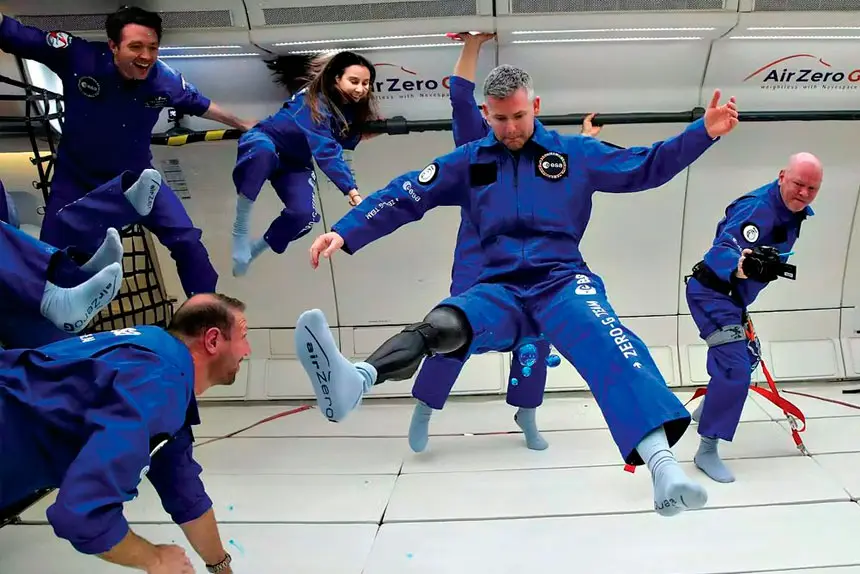
Lower-limb amputees, for example, may experience microgravity differently because of changes in body mass and circulation. Scientists are also exploring whether people with long-established sensory impairments could perform exceptionally well in situations where vision or hearing is compromised.
The question is no longer whether disabled people can cope with space. It is whether some have already spent a lifetime developing the very skills future astronauts will need.
The benefits extend beyond who gets to wear a spacesuit with designing systems that accommodate disability often improves them for everyone with a principle known as the “curb cut effect”.
The article points to deaf pilot Sheila Xu, who developed colour-changing visual signals for zero-gravity flights after recognising that engine noise made spoken commands difficult to hear. The innovation improved safety for every person on board, not just those with hearing loss.
The same thinking could influence everything from spacecraft controls to emergency procedures and habitat design on the Moon and Mars.
Space exploration is already beginning to change as Hayley Arceneaux became the first person with a prosthetic bone to reach orbit aboard SpaceX’s Inspiration4 mission in 2021.
But Dr Swann Baillie believes the real goal extends far beyond sending one disabled astronaut into orbit.
Future missions, she argues, should include disabled scientists, engineers and designers from the earliest planning stages because the solutions they develop could make spaceflight safer, more practical and more resilient for everyone.