THE history of flower fashion has its origin way back in ancient Egypt when visual design began featuring floral elements.
In the middle ages, just like today, some flowers were used in culinary dishes to enhance their look and to add both flavour and bright colour to the prepared meal.
It appears that even though huge changes have been made to the genetics of the flower, in today’s world there are still a number surviving, like marigolds, nasturtiums and daisies.
In Roman times, greater wealth and power led the people to use flowers at banquets and religious rites.
Some flowers were strewn on the floor, while others rained from the ceiling.
Researchers have found an ancient plant, Archaefructus, with very small, simple flowers, that could be one of the first flowering plants known to man.
It appears that the Siliphium was a fragrant herb often used in medicinal practices as a cough suppressant, but ancient Greeks and Romans in Libya were quick to adopt it for another vital purpose, contraception.
One of the oldest flowering plants is the magnolia species and is said to be around 100 million years old, judging by fossils found. Google tells us that the dinosaurs were still around, but there were no bees (they did not exist) to pollinate, so magnolias evolved to be pollinated by ancient beetles.
A little closer to our time, during the French period and in the reign of Louis XV1, the French society displayed extreme luxury with roses, lilies, peonies and anemones, which were often used with great effect in grand floral designs.
Certain flowers are often used today to mark special occasions. Roses are a popular choice for those wanting to express their love, while who could forget the thousands of roses blooming especially for the Melbourne Cup extravaganza.
There are different flowers for birthdays depending on the month.
Chrysanthemums for Mother’s Day represent optimism and joy.
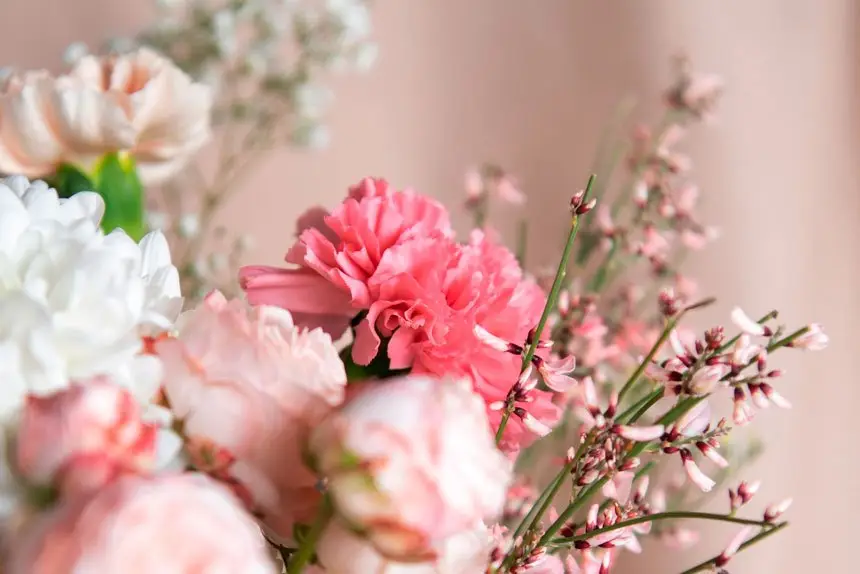
While funerals as a celebration of life are represented by lilies, roses, wreaths or crosses, orchids and carnations.
Selecting a vase is important as the flower that goes it it. Apart from the arranging of the flowers, the size must be in proportion to what is placed in it.
Till next time.