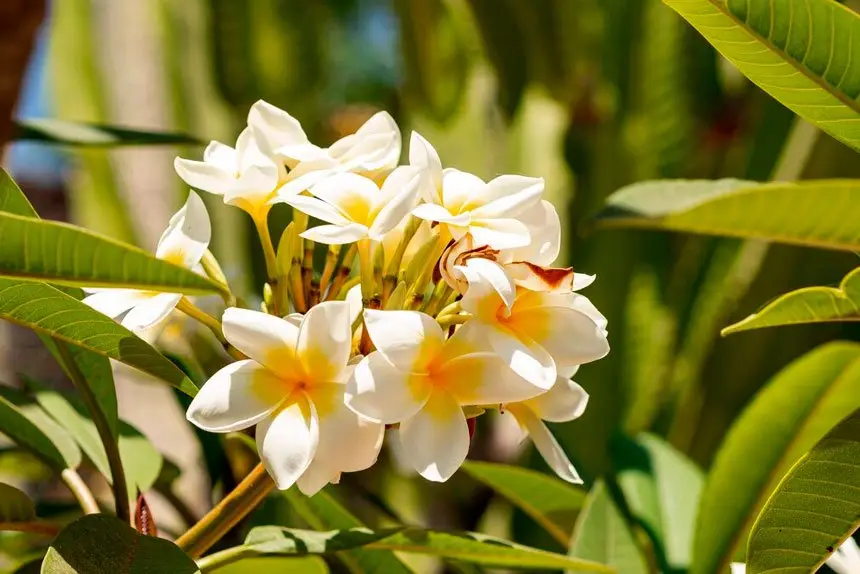
IS the frangipani a bush or a small tree?
This commonly grown plant is a small deciduous tree growing to around 5-6 metres in height as well as width, although it can be trimmed back to suit the area it’s grown in.
Left to its own devices, it can be a spectacular flowering tree for a good part of the year; however, it sheds its leaves by winter making it an ideal shade tree for tender plants to grow under the canopy in sizzling summer months.
Many people abhor the mess as the leaves continually drop till it’s a bare plant in wintertime.
Most gardeners throw them away, but left in a pile to decay and go brittle the spent leaves can be mulched and spread around the garden.
An effortless way to mulch the leaves is to gather them up when they’re dry, spread them on a section of your lawn. Running over them with your mower will mulch them and depending on the amount raked up and spread on the garden or left to absorb into your lawn.
However, frangipani can get a disease on the leaves, turning them brown earlier, these are best either sprayed or picked off and discarded in the bin.
There are a few distinct species and several assorted colour flowers available to the home gardener.
They are dead easy to grow (like pineapples). Basically, any nice shaped starting branch, preferably, a main stem, about 300mm high with three branches on top will see you with a good, shaped tree, about five metres high in about eight years.
Some prefer to leave the picked piece to harden, however they can be planted straight in the ground after choosing a suitable place.
After planting, add a 1.2m steel stake to keep the plant steady.
Don’t skimp on the toughness of the stake, not for now, but in a few years’ time, with the tree being some 4-5m across, there’s a lot of weight on a slim main stem.
A very windy day could bring your tree down – the stake helps to support it right from the beginning.
And as there are no roots when first planted, the roots will grow around the stake supporting it even further.
Frangipanis flourish in most conditions, thrive with little maintenance and care, and are extremely easy to strike.
These plant would have to be one of my top 10 favourites that cost nothing to replant and are extremely easy to look after.