

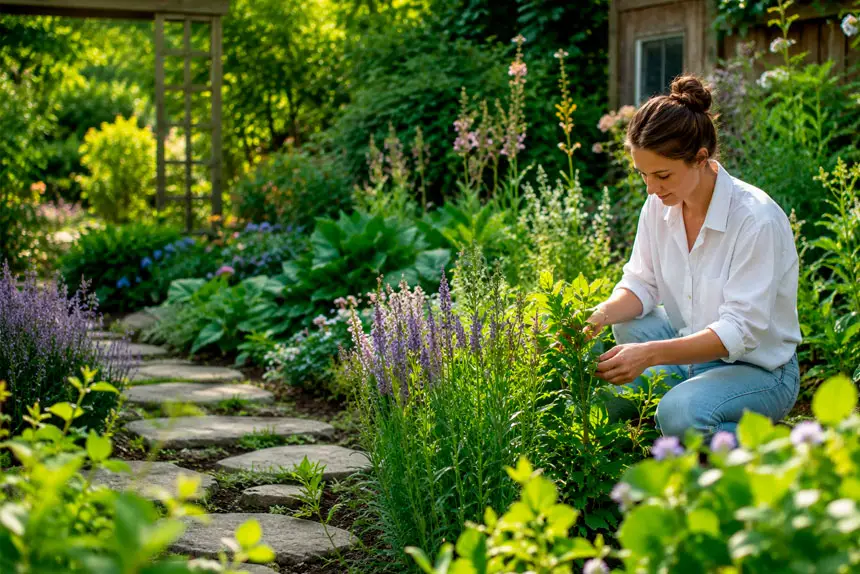
IN an age where artificial intelligence can generate everything from artwork to architectural plans in a matter of seconds, it was perhaps inevitable that garden design would become the latest frontier.
But as AI-powered landscaping apps begin promising instant backyard makeovers, one landscape architecture expert believes the best inspiration has been growing quietly for centuries.
Writing for The Conversation, University of Sheffield lecturer in Landscape Architecture Dr Camilla Allen argues that while technology has its place, creating a beautiful, meaningful garden doesn’t require algorithms or artificial intelligence.
Instead, she says history offers a treasure trove of timeless wisdom that remains just as relevant today as it was hundreds of years ago.

Her message is refreshingly simple: put down the phone, step outside and let nature become your guide.
NATURE IS THE GREATEST TEACHER
Some of the best design ideas won’t be found on a screen at all.
Instead, Dr Allen encourages aspiring gardeners to simply go for a walk.
Notice which plants flourish in neighbouring gardens, observe how colours work together and pay attention to what naturally thrives in your local climate.
These everyday observations can often provide far more practical inspiration than scrolling endlessly through perfectly curated online images.
As renowned 18th-century landscape designer William Kent famously observed, “All nature was a garden.”
Today, that philosophy feels more relevant than ever as homeowners increasingly look to create gardens that support wildlife, attract pollinators and work in harmony with the natural environment.
WORK WITH WHAT YOU’VE GOT
Every garden has its own personality.
Rather than treating a backyard as a blank canvas, Dr Allen encourages gardeners to embrace what landscape designers have long referred to as the genius loci – the “spirit of the place”.
That means understanding the site’s natural features, whether it’s a shady corner beneath an established tree, a sunny patch perfect for vegetables or a gently sloping block that offers opportunities for layered planting.
British gardening writer Anne Scott-James made a similar observation more than 50 years ago, noting that few people are blessed with the perfect garden.
The secret, she believed, was creating harmony by working with the landscape rather than trying to completely reshape it.
HAVE A VISION
Every successful garden begins with a simple question: What do you want this space to become?
A clear sense of purpose creates gardens that feel cohesive rather than cluttered.