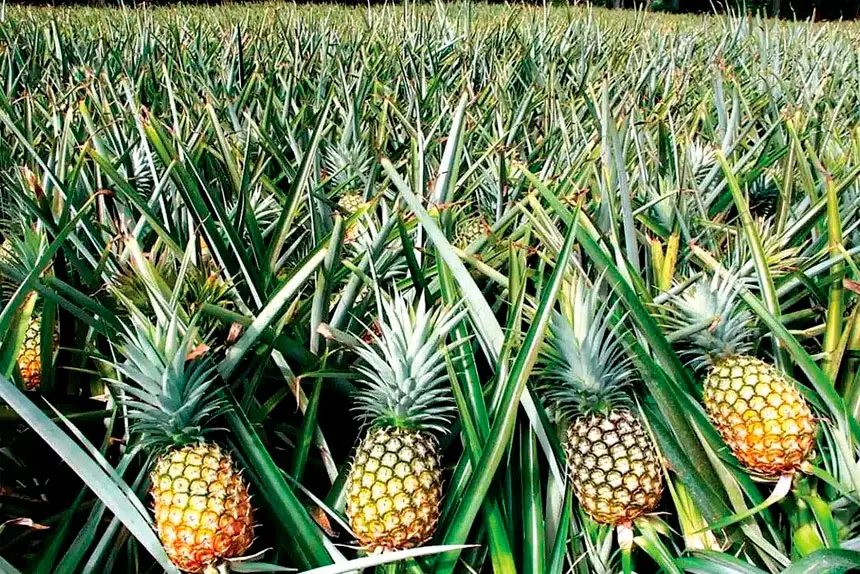
THIS is Part 3 of my series on growing pineapples successfully at home.
By now, I hope you have decided to plant a couple in your garden.
The hardest part is the waiting. Pineapples are one of those plants that require very little attention, which makes them perfect for the lazy gardener.
You can simply plant them in a spare corner of the garden and let them do their thing.
The only creatures I’ve noticed taking an interest in them are those large brown grasshoppers that like to nibble on the leaves. Don’t worry too much about that – they have a right to be there as well.
The hailstorm we experienced in October last year damaged quite a few leaves and even some of the fruit.
Fortunately, pineapples are very resilient plants and they soon recovered. If your plants suffer similar damage, simply trim back the damaged leaves and they will continue growing.
You may also notice that pineapple plants grow to different heights. Some can reach around a metre tall, while others might only grow to about half that height.
When planting, allow about 30cm between each plant so they have enough room to develop properly.
During very hot weather, pineapples can sometimes suffer a little sunburn. This usually appears as a dark brown patch on the fruit, sometimes up to about two centimetres across.
It might not look very attractive, but the thick skin of the pineapple usually protects the fruit inside, so there’s no need to worry.
One of the trickiest parts of growing pineapples is knowing exactly when to pick them. Pick too early and the fruit can be a little on the tart side. Leave it too long and there’s a chance it could become overripe and mushy inside.
A good rule of thumb is to pick the pineapple when it is about two-thirds yellow with some green still showing.
One useful tip is to take photos throughout the process – when you plant them, when the fruit first appears and when you finally pick it. The date stamp on the photos can be very helpful for future planting.
Until next time.