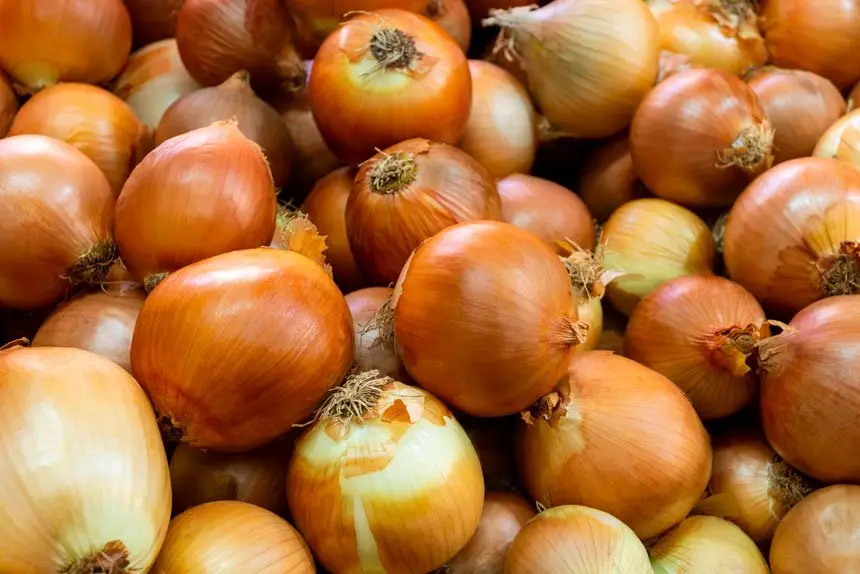
TODAY this column is all about onions.
There are various members of the onion family – from chives, spring onions, leeks, garlic and shallots to the tree onion, also known as the Egyptian walking onion.
Similar to a common onion, the walking onion produces a cluster of bulblets where you’d usually find small, delicate white flowers.
The Egyptian walking onion begins life much like an ordinary onion and can be planted once your other crops start to fade. Bulbs are typically ready for harvest around spring to early summer.

Instead of flowers, these plants develop small bulbs (often up to 10) at the top. Eventually, the bulbs become so heavy that the plant bends over, almost as if admitting defeat.
If left alone, the bulbs fall to the ground and take root – essentially “walking” through your garden.
Like most onions, they require little maintenance. Once planted, they need only occasional watering.
They’re one of the easiest onions to grow.
To get the most from your plants, start with a full bulb – you could harvest up to 10 new ones by the end of the season. From planting to picking usually takes about five months.
You’ll know they’re ready when the leaves begin to brown and the plant starts looking tired.
If planting part of a bulb, or any bulb at all, sow it with the pointy end just poking through the soil’s surface.
Most onions keep for ages – much like pumpkins – as long as they’re stored in a cool, dark, dry place.
The leaves and bulbs of walking onions are all edible and have a mild onion flavour.
They can be used like ordinary brown onions and may be a gentler option for those who dislike strong-flavoured varieties.
Walking onions are not only easy to grow but also self-sustaining, making them very economical.
When planting onion seedlings, a handy method is to tease them apart from the container, dig a long shallow trench, and lay each plant sideways in the trench about 60mm apart.
Then fold the soil over the roots, standing each plant upright as you go. Water them in well.
Till next time!