

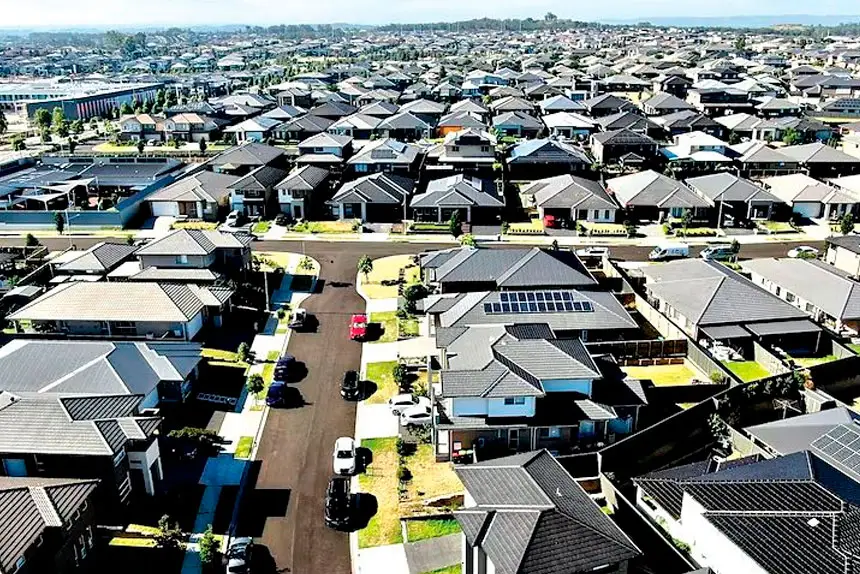
INFRASTRUCTURE shortages remain one of the biggest barriers to increasing Australia’s housing supply, as residential land prices climb to new record highs.
The median price of residential land sold nationally reached $397,840 in the December quarter of 2025, according to the latest HIA-Cotality Residential Land Report.
HIA Senior Economist Tom Devitt said residential land prices rose 1.5 per cent in the final quarter of 2025 and were 9.4 per cent higher over the year.
That growth was almost three times faster than consumer prices over the same period.

“A lack of shovel-ready land and associated infrastructure has been by far the number one constraint on home building over the last few decades, even with more recent material price shocks and acute labour shortages,” Mr Devitt said.
“There are tens of thousands of homes that could commence construction around the country if the essential transport and utilities infrastructure was in place.”
The report tracks sales activity across 52 housing markets, including the six state capital cities.
Mr Devitt said Perth, Brisbane and Adelaide had been recording new land price highs for several years, driven by strong home building recoveries, while Sydney, Melbourne and Hobart had recently reached record highs of their own.
But he warned land shortages were now limiting the number of lots being sold in some markets, threatening to again constrain housing supply.
“The problem is that local and state governments face financial constraints that often impede the timely delivery of such infrastructure and subsequent housing,” he said.
Mr Devitt said the recent Federal Budget had made progress, including $2 billion for enabling infrastructure, but more action was needed to unlock new housing supply.
“The reacceleration of lot prices in recent quarters highlights the importance of addressing the constraints to the delivery of more shovel-ready land and infrastructure,” he said.
“The Australian Government’s commitment is a positive medium-term step in the right direction.”
Cotality Research Director Tim Lawless said rising land prices were occurring as established housing markets began to lose momentum.
“We have seen Sydney and Melbourne home values gradually falling since December last year, while the smaller capitals are clearly losing steam as higher interest rates and affordability pressures bite,” Mr Lawless said.
“While we may see some affordability improvements as established markets navigate softer conditions, an ongoing scarcity of new housing remains an offsetting factor.”