
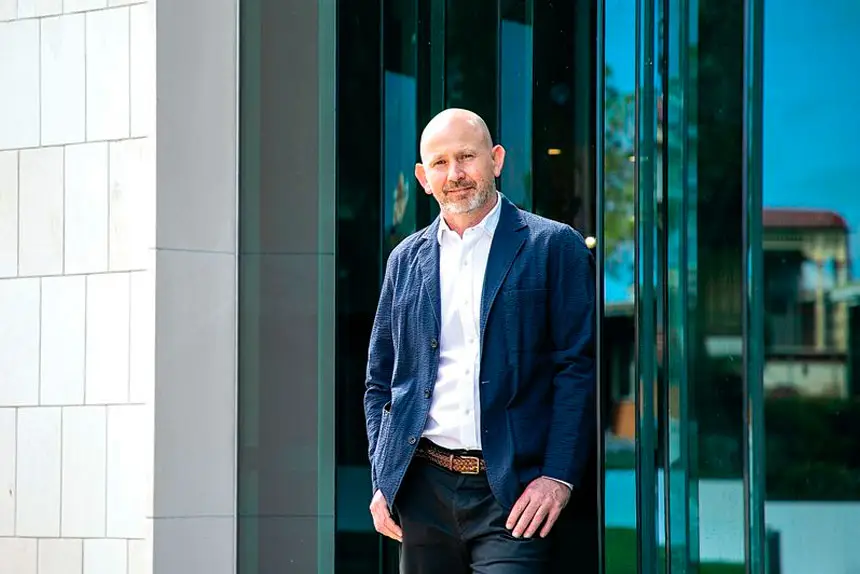
THE FUTURE of Ipswich is being put in the hands of one man tasked with protecting its past while shaping what comes next.
As the city’s first-ever City Architect, Mark Tendys has been handed a powerful and wide-reaching role guiding how Ipswich grows, and how it balances rapid development with the preservation of more than 7000 heritage-listed sites.
The position is designed to ensure new development doesn’t come at the cost of the city’s character, with Mr Tendys acting as a design leader across architecture, heritage and planning – effectively setting the standard for how Ipswich evolves as one of Queensland’s fastest-growing regions.
“I am deeply passionate about preserving and maintaining Ipswich’s rich and treasured heritage, represented in more than 7000 protected places, including stunning character homes and unique civic buildings,” Mr Tendys said.

“These places are not only a great legacy, but also a significant opportunity for our city.”
His role is not simply about buildings or aesthetics; it is about setting a standard for how Ipswich grows.
“As Ipswich continues to grow rapidly, I see my role as City Architect as being an advocate for thoughtful and people-focused design, as we accommodate residents, communities and businesses – both new and established,” he said.
Earlier this year, Ipswich City Council was awarded the Australian Institute of Architects President’s Medal for its decision to appoint a City Architect, an acknowledgement of the city’s forward-thinking approach to managing growth alongside heritage values.
Deputy Mayor Nicole Jonic described the appointment as a “city-shaping decision”.
“This award recognises Ipswich as a growth council with a proud connection to our internationally renowned heritage,” Cr Jonic said.
“Because of our liveability, rich heritage and cultural offerings, more and more people want to live, work and play in Ipswich.
“The City Architect is our design champion for all things architecture, heritage and place – helping us to blend old and new.”
Mr Tendys said the role itself reflects a growing recognition of architecture as a key discipline in shaping cities.
“When it comes to city-making, future-proofing is about flexibility,” he said.
“Simple, even traditional ideas – such as high-amenity, walkable cities – remain some of the most effective ways to strengthen our future.”
Councillor Marnie Doyle, who has been actively involved in shaping the broader conversation around heritage protection at a State level, said heritage was not limited to just buildings.
“Heritage is more than just the past, it’s our legacy,” Cr Doyle said.
“It reflects the stories, connections, places and experiences that have shaped Queensland’s communities.”
For Mr Tendys, that legacy must also respond to modern challenges, particularly climate and sustainability.
He sees success lying between guidance and community ownership.
“While Council provides guidance, it is ultimately the community that shapes the city,” he said.