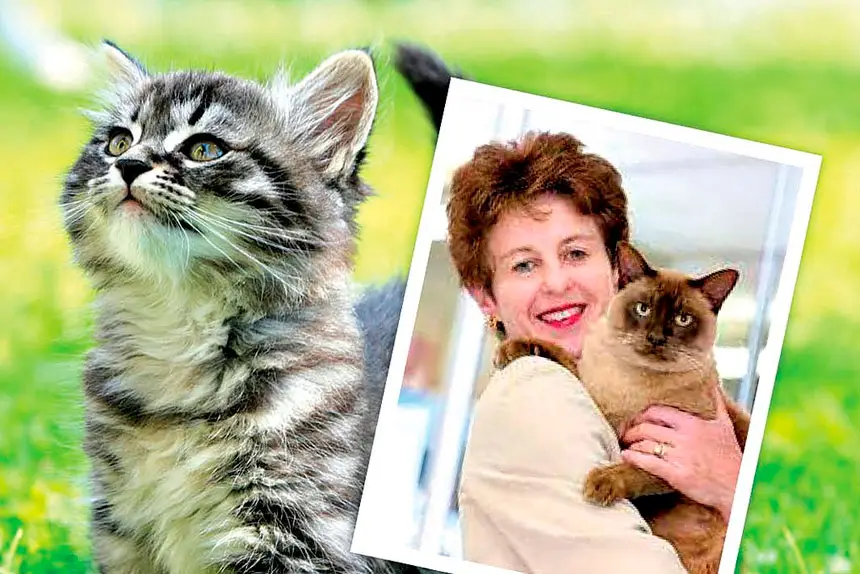
FOR Jacquie Rand, the issue of free-roaming cats extends far beyond numbers – it touches people, animals, and the intersection of community compassion and science.
A veterinarian for over 50 years, Dr Rand specialised in internal medicine for dogs and cats and spent 25 years teaching at The University of Queensland.
Today, she channels her expertise into one of Australia’s most successful animal welfare initiatives, the Ipswich Community Cat Program.
“After a few years, I realised that the traditional system of euthanising healthy animals in pounds was taking a real toll on mental health,” she said.
“Looking into the eyes of a healthy dog or cat, knowing I had to euthanise it because the pound had to be cleared – it was devastating.”
The statistics are sobering, with 50,000 cats being euthanised each year across Australia.
The Ipswich Community Cat Program takes a different approach, targeting high-intake suburbs – often low-income areas such as Goodna, Redbank, and Rosewood – where residents care for free-roaming cats but struggle to afford desexing or microchipping.
“When you look at the median income in Rosewood, for example, it’s $600 a week,” Dr Rand said.
“To desex a female cat can cost $300 to $500, and that’s without microchipping.
“Many people just can’t afford it. But they care deeply for the cats, and those cats are often fed by compassionate residents who didn’t choose the cat – the cat chose them.”
Under the program, cats are desexed, microchipped, and returned to their care-givers, which reduces reproduction, roaming, and conflict.
“De-sexed cats fight less, roam less, and their health is better,” Dr Rand said.
“And if they’re cared for properly, you can prevent kittens from being born that would otherwise end up in shelters.”
By its third year, the program’s success spoke for itself with cat intake dropping by 60 per cent, euthanasia rates fallinig by 85 per cent, and cat-related complaints to the Council decreasing by 39 per cent.
Dr Rand advocates for legislative reform aligned with evidence-based practices, allowing humane, practical management at scale.
Animal Welfare League Marketing and Media Head Christian Bowman highlighted the research-led approach behind the program.
“All of our work is focused on the science – building a strong body of research that contributes to effective preventative measures,” Mr Bowman said.
“Jacquie’s work with our cat program is invaluable. It’s helping us build a body of evidence on community impact, cat behaviour, and movement patterns.
“It informs better decision-making and supports responsible pet ownership.”