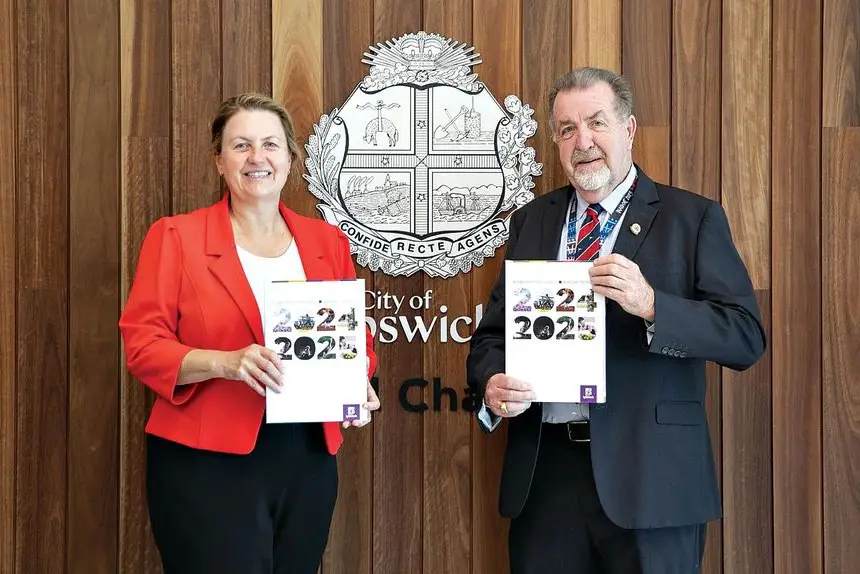
WITH the year’s first Ordinary Meeting of Ipswich City Council taking place today, residents are watching closely for signs of a constructive start from their elected representatives – against the backdrop of a heated state-level debate about the future of local government.
Earlier this month, Cr Paul Tully lodged a formal submission to the Queensland Parliament inquiry into the Local Government (Empowering Councils) and Other Legislation Amendment Bill 2025.
While backing many of the reforms, he warned that parts of the Bill could undermine local democracy and leave ratepayers footing the cost.
The Bill proposes a range of changes broadly supported by councils, including simplified conflict-of-interest rules for councillors, stronger privacy protections for election candidates, and expanded powers for the Electoral Commission to determine whether local polls should be conducted by postal ballot.
“These changes improve clarity, fairness and common sense in the way councils operate,” Cr Tully said.
However, he raised strong objections to a proposal requiring councillors to automatically vacate their seat if they nominate as a candidate for State Parliament – regardless of the election outcome.
His submission also addressed provisions formally recognising the mayor as a council’s official spokesperson.
“There has been concern that every media release or local flyer would need to include the mayor, even for purely divisional matters,” he said.
“That was never the intent, and it’s important the legislation makes that clear.”
Ipswich Mayor Teresa Harding recently appeared before the Local Government, Small Business and Customer Service Committee, defending the importance of open debate on reforms affecting councils.
“Having open dialogue on legislation affecting local government is an essential part of a healthy and transparent democratic process,” Mayor Harding said.
On the contentious proposal requiring councillors to vacate their seat if they nominate for State Parliament, Mayor Harding said the measure was aimed at protecting council stability.
“When someone is elected to local government and immediately puts their hand up to run for a State seat, it creates upheaval, uncertainty and an unnecessary burden on the council,” she said.
“This change may help ensure communities receive the representation they voted for, rather than facing repeated by-elections and disruption.”
Mayor Harding also welcomed the formal recognition of mayors as official spokespersons, describing the clarification as overdue.
Looking ahead, she said the success of the legislation would be judged by whether it restores clarity, strengthens accountability and rebuilds public trust — particularly in communities like Ipswich that have experienced governance failures in the past.
“Transparency builds confidence,” she said.
Cr Tully was contacted by Local Ipswich News with follow up questions but chose not to respond.