

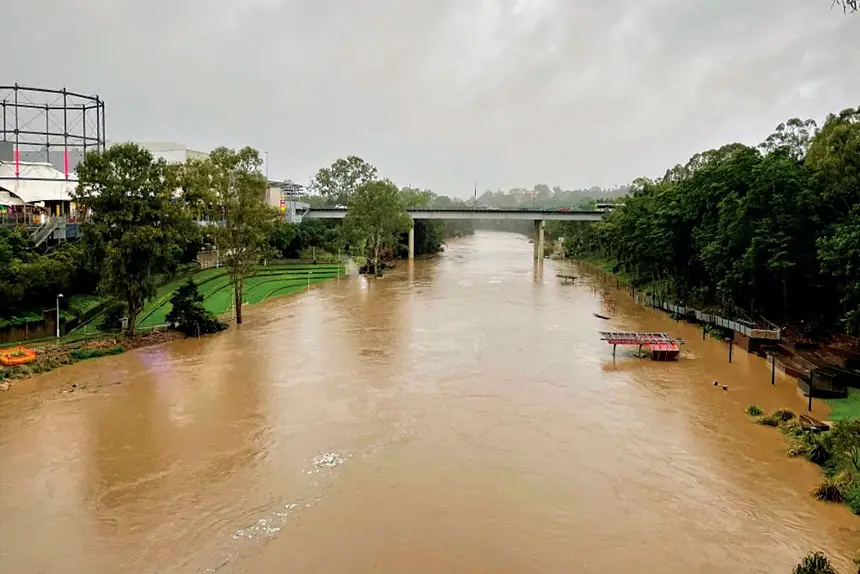
IPSWICH has always been a city shaped by resilience, and every so often, it’s worth reminding ourselves why safety and preparedness matter.
The region’s long history of natural and industrial disasters tells a story not just of destruction, but of a community that continually learns, adapts and rebuilds.
Ipswich’s first recorded disaster dates all the way back to 1841, when the Bremer River rose to more than 23 metres, swallowing the settlement and setting the tone for a century of major floods to come.
In the decades that followed, Ipswich endured five more significant floods, each one testing the city’s strength, each one reshaping how locals understood the river that runs through their home.

The worst of them arrived in February 1893.
Known as The Great Flood, it remains one of our most devastating natural disasters.
Fuelled by three tropical cyclones in rapid succession, the Bremer surged to almost 25 metres, turning the Ipswich CBD into a vast inland lake.
Streets disappeared, buildings were swept away, and neighbourhoods were cut off.
Beneath the surface, the impact was even more tragic, the floodwaters triggered catastrophic failures in underground mines, leading to multiple fatalities and leaving a deep scar on the city’s industrial workforce.
But Ipswich’s history of hardship isn’t limited to natural disasters.
Industrial tragedy struck again in 1972 at the Box Flat Mine, where an underground explosion claimed 17 lives instantly.
It remains one of the darkest days in the region’s mining history, a reminder of the risks workers once faced daily, and of the safety standards that have since been strengthened because of it.
These events sit heavily in Ipswich’s past, but they also serve a purpose.
They remind us why emergency planning matters, why flood awareness saves lives, and why strong safety standards aren’t optional.
Ipswich has rebuilt before, and it will again, but remembering where we’ve come from is how we stay ready for whatever comes next.