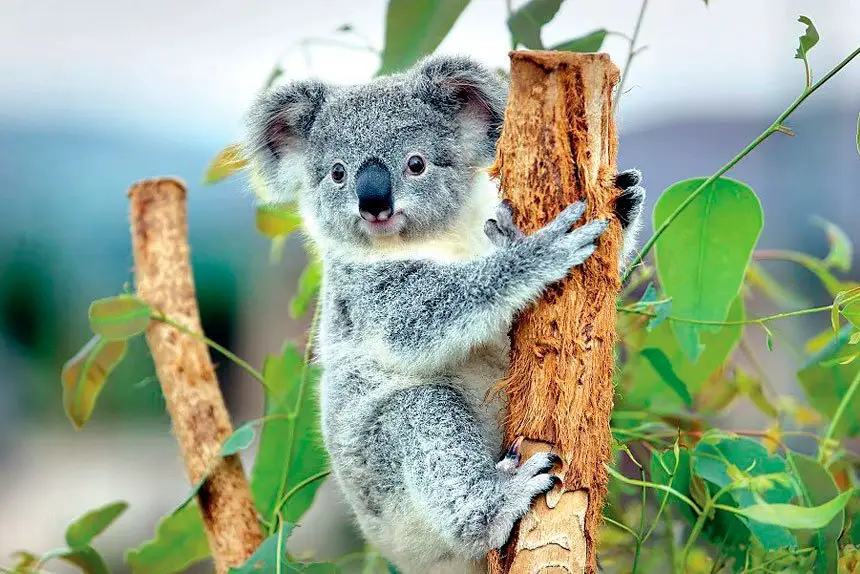
Koala habitat is set to be expanded with Ipswich City Council’s decision to move forward with the acquisition of 320,000sqm (32 hectares) of land for environmental purposes.
Finance and Governance Committee chairperson Councillor Paul Tully said the land at South Ripley sat within a significant ecological corridor that is home to several native animal species, including koalas, and important species of flora.
“Council’s Enviroplan program outlines our priority to strategically acquire land to protect, enhance and expand Ipswich’s environment and natural beauty, which are among the many things that make our city great,” Cr Tully said.
“The land was identified as having importance to the environment in building connections between core conservation areas, and council moved to purchase it with the funds raised through the Enviroplan levy.
“Council has a key role to play in protecting our local natural areas and takes seriously our obligation to the environment, as outlined by Enviroplan.”
Division 1 Councillor Pye Augustine said that with the council’s decision on the property acquisition, the purchase would now progress and be finalised with the owners, ensuring the land that might have otherwise been lost would be secured for environmental purposes.
“This important piece of land sits between two of Ipswich’s biggest conservation areas – White Rock-Spring Mountain Conservation Estate and Flinders-Goolman Conservation Estate – both of which are major native animal habitats and places for nature-based recreation, including bushwalking,” Cr Augustine said.
“Council has taken a targeted approach to environmental land acquisition, and to progress the purchase of this sprawling property will be a remarkable achievement.”
Local wildlife protection advocate and Ipswich Koala Protection Society spokesperson Ruth Lewis told Local Ipswich News that residents had to learn to co-exist with local species.
“We need to try and co-exist; it would be nice if there was no tree clearing but obviously it’s not that black and white,” she said.
Ms Lewis said koala populations were unique to the region they called home, or their homing range, which made the decision from council particularly welcome.
“The babies establish that gut flora from their mother and that determines what leaf they can eat,” she said.
“A lot of our Ipswich koalas just thrive on old tough ironbark, crappy old tough old ironbark, while koalas on the north side or the south side of Brisbane rely on beautiful cherished blue gum.”