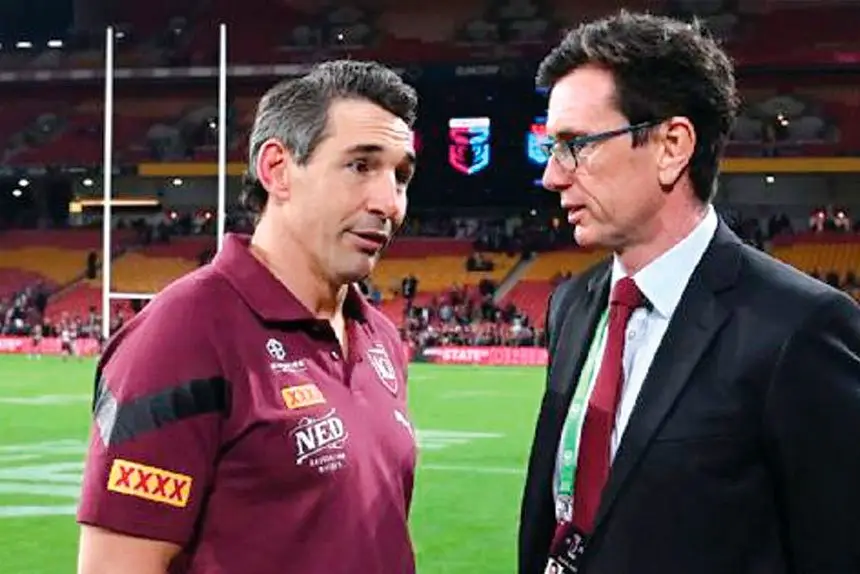
THE rugby league heartland of Ipswich and the western corridor is ripe for the NRL to insert a 20th side, insists Queensland Rugby League Chief Executive Ben Ikin.
The Australian Rugby League Commission has agreed in principle to a revised proposal from the Western Australia Government for an NRL team in Perth in 2027, which will resurrect, in an affiliation, foundation club North Sydney Bears.
When the former western corridor bid, now known as the Jets, was forged 18 years ago, former NRL boss David Gallop toured the region and said the game had to go “where the fish are biting”.
The rugby league heartland produced the Walters brothers and Allan Langer, and further to the west the likes of Shane Webcke, Steve Price and Darren Lockyer.
The Jets, slated to be based in Ipswich but with an affiliation with Newtown Jets, has Ikin’s backing as the next franchise.
“(PNG) gets us to 19 teams so it makes sense that we get to 20 to fully realise the broadcast rights opportunity,” he said.
“Then you can have 10 games and maybe the chance to split up into conferences and do some good things with the draw.
“That (western corridor) region has such a rich rugby league history, and from a population perspective is one of the fastest growing in the country, and it is rugby league mad.
“The AFL are out there with an elite presence (at the Brisbane Lions’ home base in Springfield) and we are not.
“It makes sense to me that once you get through the logistically challenged franchises in PNG and Perth, then you can potentially bolt on and make team number 20 something you could switch on really quick.”
The Ipswich-based Jets bid would also add the romantic notion of revitalising foundation club Newtown Jets.
“Who doesn’t like a bit of romance in rugby league? To have that brand in the elite national competition would be special,” Ikin said.
“In that western region effectively, you will drag in Brisbane central like the (Brisbane) Tigers, the Ipswich Jets as another pathways club, and the Western Clydesdales out there in Toowoomba.
“The road that connects the two most western of those pathways clubs is called Darren Lockyer Way. If that doesn’t make sense from a rugby league perspective, I don’t know what will.”