
AS National Stroke Week is marked from August 3-9, health professionals are urging Australians to become “FAST heroes”, warning that recognising the signs of stroke and calling 000 immediately could mean the difference between recovery and lifelong disability.
The message carries particular significance for the Ipswich and West Moreton region, with West Moreton Health statistics showing an average of 675 hospital separations each year for stroke among West Moreton residents.
During the three years from 2017 to 2019, stroke claimed an average of 85 local lives annually, with women accounting for 57 per cent of those deaths.
A stroke can happen without warning, forever changing a person’s ability to walk, talk or live independently.

Strokes remain one of Australia’s leading causes of disability and death, yet many are preventable and, when treated quickly, their devastating impacts can often be significantly reduced.
A stroke occurs when blood flow to the brain is suddenly interrupted because a blood vessel becomes blocked or bursts – without oxygen, brain cells begin to die within minutes.
A transient ischaemic attack (TIA), often referred to as a “mini-stroke”, occurs when the interruption to blood flow is temporary, and symptoms resolve within 24 hours.
However, it should never be dismissed, with clinicians describing a TIA as a critical warning sign, with the risk of suffering a major stroke highest within the first 48 hours after a TIA.
Other warning signs of stroke include sudden loss of vision or double vision, difficulty understanding speech, dizziness, loss of balance or coordination, and sudden numbness or weakness affecting one side of the body.
While stroke can affect anyone, certain people face a significantly higher risk, including those aged 60 years and over, people who have experienced recurrent TIAs, those currently taking anticoagulant medication, and people living with high blood pressure, atrial fibrillation, diabetes, high cholesterol (dyslipidaemia) or carotid artery stenosis among the highest-risk groups.
Smoking and excessive alcohol consumption also substantially increase the likelihood of suffering a stroke.
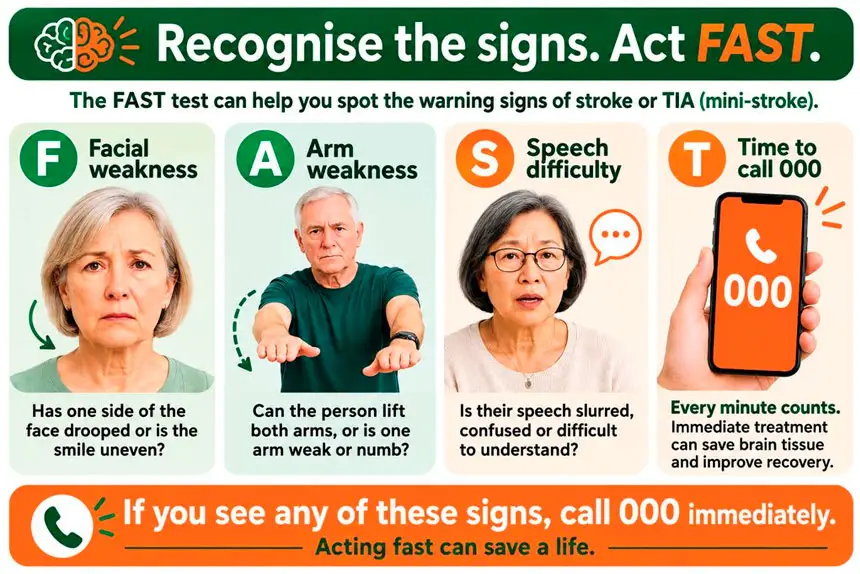
During National Stroke Week, the message from health professionals is simple but powerful: know the signs, act FAST and call 000 immediately. Every minute counts, and acting quickly could save a life.