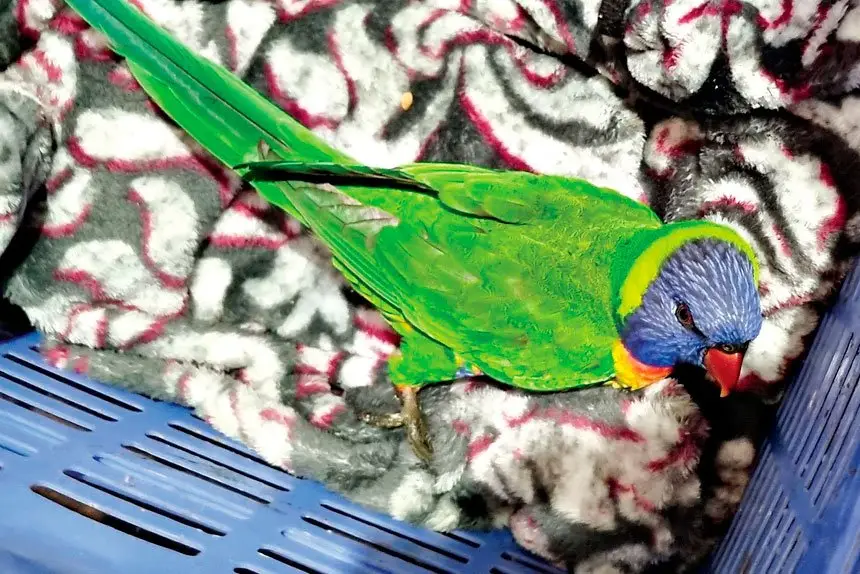
A wildlife carer believes mango sap is the cause of lorikeet paralysis syndrome (LPS), a disease that ravaged Ipswich and surrounds in January.
LPS causes rainbow lorikeets to become paralysed and unable to fly, although the exact cause is currently undetermined. This year, Booval has been ground zero for distressed birds taken to vets and animal hospitals, according to the RSPCA.
Kerry Schilling, founder of Woolloongabba-based Kerry’s Wildlife Rescue & Care — like many wildlife carers over the summer — has dealt with an influx of lorikeets needing weeks of treatment.
Based on her long experience, Kerry believes mangoes are the culprit.
“It’s actually the sap. I’ve done a lot of research. The sticky [sap] substance near the mango stem is toxic, very toxic… It’s like a latex, and it’s acidic… it paralyses their throat.”
The sap typically blackens the skin of mangoes, and if eaten can burn the skin and throat of animals, including humans and birds, Kerry explained.
Her suspicion of mangoes has been brewing for over a decade, ever since living and working as a wildlife carer at a regional caravan park.
“Years and years ago, when I was [there], all the lorikeets were found under the mango trees. I thought… ‘it’d have to be something to do with the mango’.”
To treat affected birds, she has been crop-feeding them lorikeet food mix, with extra honey to act as an antibiotic, as well as an anti-inflammatory compound that helps with muscles and tendons, particularly those in the throat.
She noted that Brassall-based Laura — who runs Laura’s Unconventional Menagerie and Wildlife Rescue — popularly known as Laura the Lorikeet Lady, was in support of her theory, but others were not listening.
She has documented her findings and approached RSPCA with her theory but says the animal care charity is effectively ignoring it.
“I talked to [the RSPCA] on the phone… they said Wildcare Australia is [in charge of] that. I said you have to listen to me. It’s the sap. It’s working for me.”