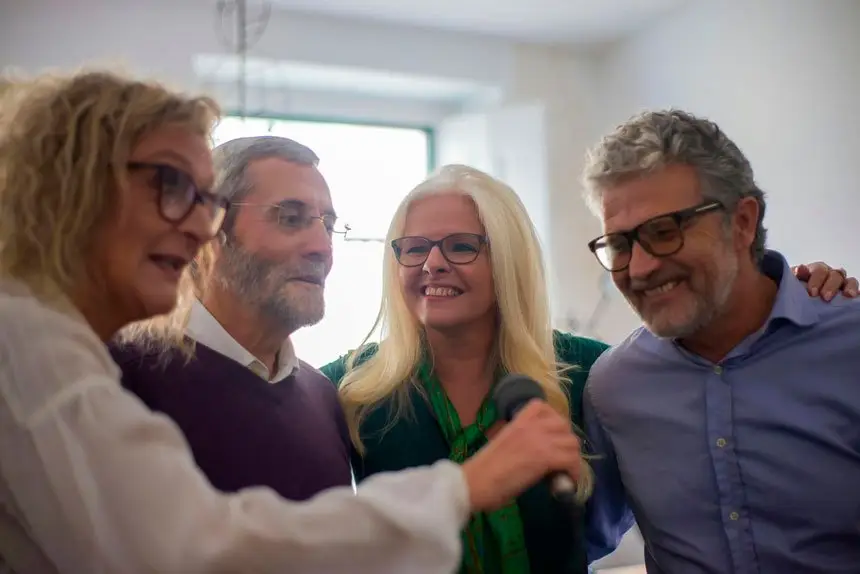
THE SOUND of music plays a different role as we become older.
Studies suggest that it peaks in our mid-20s, and by our early-30s less and less time and energy are devoted to this medium.
I guess our lives have then become much more complicated by then, with relationships, perhaps marriage, or further studies and our working situation also taking their toll.
But mo matter what your age, music evokes strong emotions and sometimes heartwarming memories of yesteryear. It also provides a way to express ourselves, whether we know the words or just the tune.
Billy Joel says: “Music is self-healing. It’s an explosive expression of humanity; it’s something we are all touched by. No matter what culture we’re from, everyone loves music.”
For families and caregivers, music can provide a shared positive experience. It can also provide the only interaction that otherwise may be unavailable.
People with dementia may not be able to communicate, but music can be a trigger for remembering and is being widely used by staff to help those in need.
Music can be highly motivating when exercising, especially, walking or cycling or working out with weights. The right music can motivate and encourage older adults to get more physical, which in turn helps seniors to maintain that muscle strength and flexibility, so easy to lose when getting on in years.
This also assists in heart health, bone density and balance.
Experience with balance issues is an ongoing issue with the elderly, and the longer one can keep moving around the better.
Most don’t realise that your balance can affect so many aspects of your life. Making the bed, cooking tea, and even turning around quickly to do something is fraught with the danger of falling.
Being the right distance away to reach into the fridge, putting your clothes on, doing your hair or teeth.
Other balance issues appear in the dark, when you can lose that sense of where you are positioned on the ground, and when windy weather dictates for you when to go outside.
Your social life or family functions become a nightmare for some.
Music also assists with our mental health and has the power to evoke strong emotions in us all. Nostalgia isn’t just a fleeting recollection of favourite songs and earlier times, but rather the music brings our adult brains back to the passions of youth.
How does music affect you? Turning on the TV one Saturday, (just for something to do), it was tuned to SBS, and this concert was on from The Netherlands.
It was called “The Maestro and the European pop band” – a thoroughly delightful mix of music and singing to a huge audience, with a lot of elderly people appreciating the effort that went into the production. (Available on YouTube if you want to appreciate something different).
What does music do to you?