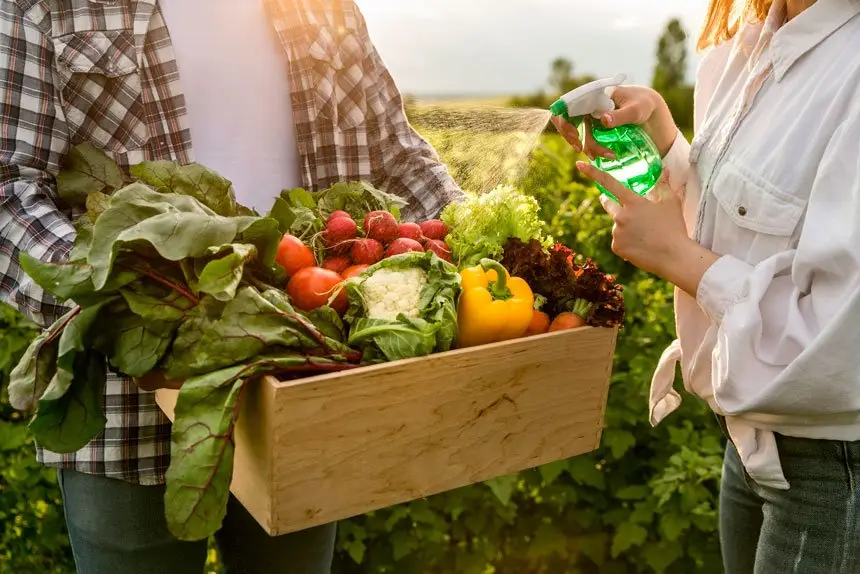
Carrying on from last week in the 50-year-old book that I have been looking at for stories – what is organic growing or organic farming?
Organic farming is the growing of crops in rich soil in organic matter, without the use of synthetic pesticides
Previous “Lazy Gardeners” have mentioned numerous ways that farmers have grown vegetables in this way.
From banana crops to everyday vegetables that are grown organically in many parts of the country.
Organic farming isn’t “lazy farming”, rather, it’s about efficient crop management together with water control, mineral applications, crop rotation and green manuring. All these things combine to allow a farmer control over his crop.
Food grown this way is not treated or processed or treated unnaturally after harvest.
Less than one fifth of the Earth’s surface is covered in topsoil which can grow food. Huge areas are gobbled up daily by industry, housing estates and roads in our expanding cities around the country.
Before the 1850s there were no chemicals used in agriculture. Farming was carried out using traditional methods developed by farmers over thousands of years.
It appears that in 1840 a man named Justus Von Liebeg put forward a simplistic theory that plant matter only consisted of the elements left in the ash after burning, which was nitrogen, phosphorus and potash, forgetting that there were earthworms, fungi and the biological value in the soil to consider.
This theory then led to the birth of artificial fertilisers and the NPK (nitrogen, phosphorus, potassium) mentality.
Many bad chemicals have been banned around the world, but there are some that are still used that can be very dangerous to all.
Some sprays unfortunately kill the good guys as well.
So maybe, when attending to your garden, think about what you add in the way of fertiliser, compost and artificial means of helping plants grow – there might be another way.
Just look at how good the garden grows after a good lot of rain. You can almost see the plants grow with all that nitrogen.
Organic farming makes use of compost, and the added humus improves the structure of the soil and its capacity to hold water and nutrients. The soil becomes easy to work with.
Should you be short of materials for composting, try crops of green veges like lupins, peas, oats, rye, or corn or grasses like clover or lucerne, or even decayed leaves or lawn clippings.
Just try to not use any bad elements in your garden. Your plants will thank you for it.
Till next time.