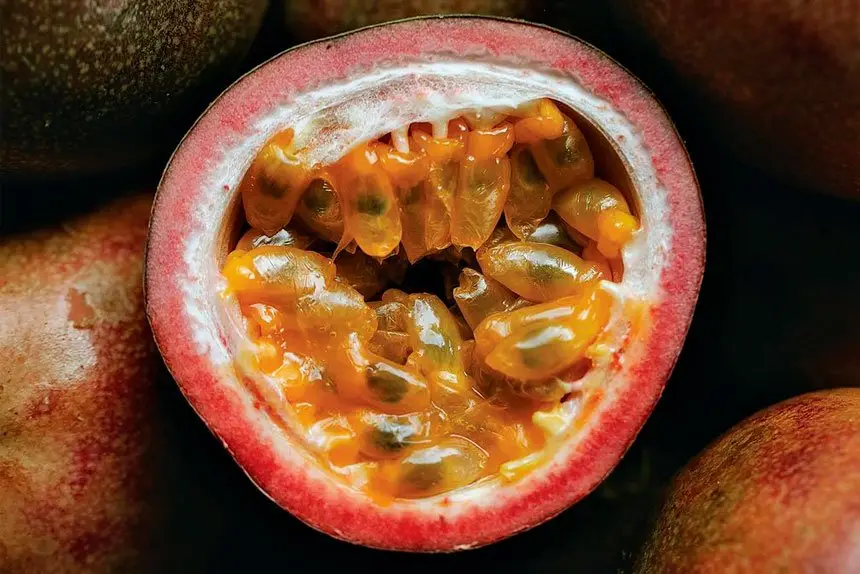
Last week’s column was about farmers who changed their lifestyle and turned to passionfruit growing – once again showing how diversification can provide a living.
Passionfruit are surprisingly easy to grow. In fact, they’re probably one of the easiest plants you can have around the home.
After planting, you’ll need a strong support system. And I mean strong—because the vine can become quite thick.
Add in the weight of the fruit and the twisting growth of the vine, and a lightweight structure could easily be pulled away from a wall.
Passionfruit are also heavy feeders. When planting, dig a generous hole and add plenty of compost to give the vine the best start.
Your support structure might be a sturdy fence or a free-standing homemade frame. Parallel wires or heavy wire netting work well, but remember – you need to train the vine to grow where you want it. Left to its own devices, it may just bunch up in one spot. Attaching side shoots is important too, as it spreads the plant and gives it a neater look.
Spring is the ideal time to plant. Passionfruit vines are relatively short-lived, lasting around six years. Planting a younger vine before the older one finishes ensures a steady supply of fruit.
When buying, always check that your chosen variety is self-fertile, meaning it can fruit on its own. Some need a second plant for pollination. Fruiting can happen as early as six months, although some varieties may take up to 18 months.
Like most plants, passionfruit can be affected by scale, pests, poor drainage, or extreme heat. A handy tip: lightweight frost nets also work well on scorching days to protect vines from heat stress.
After fruiting, prune back old foliage. New flowers and fruit grow on new wood, so trim away old growth – at least 30cm – and tidy up tangled or damaged branches.
One final note: possums love passionfruit! If you live in a suburb where these critters are common, cover the vine with fine bird netting overnight. Otherwise, they can quickly strip a plant bare.
Until next time!