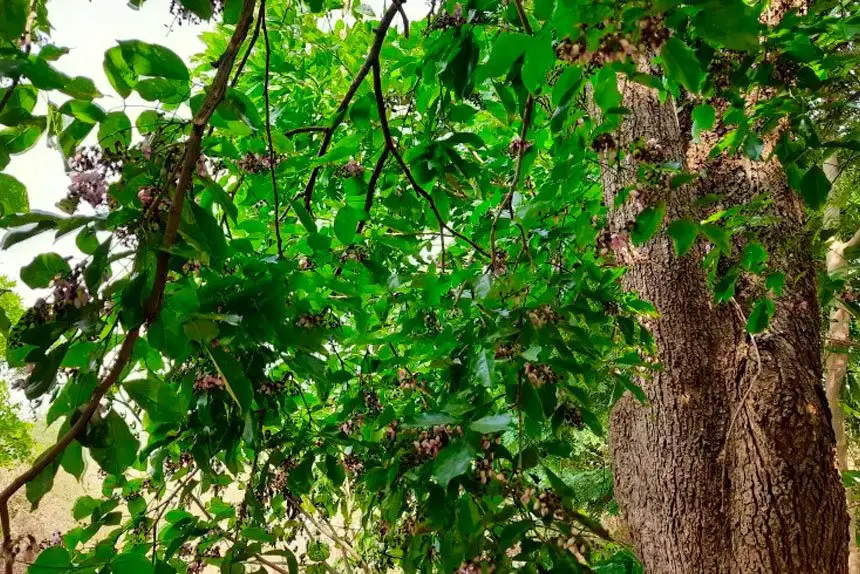
Pongamia pinnata, according to Wikipedia, is a species of tree in the pea family, found in tropical Asia, Australia and the Pacific Islands.
It’s a small to medium tree, usually growing between 8-12 metres, though some can reach up to 18 metres.
This attractive shade tree has glossy leaves and highly perfumed pink, white and purple flowers. Hardy and tolerant of coastal conditions, it’s often known by its common name, Indian Beech.
The Pongamia tree has a bright future for industrial purposes – and it also possesses hidden qualities that benefit people and the environment.
Each tree produces between 10,000 and 40,000 oil-rich seeds, making it a potential source of biofuel. Like soybeans, Pongamia beans are high in protein and oil, and the tree can thrive almost anywhere. It requires very little water, making it suitable for dry environments.
Bees create a distinctive black honey from its fragrant blossoms, while the oil has traditional uses in treating skin conditions and some stomach ailments. The leaves also serve as valuable fodder for cattle and goats.
In India, Pongamia oil has long been used in cooking and as an alternative to diesel. Here in Australia, mining giant Rio Tinto has been investing in Pongamia’s potential. The company has planted 8000 trees near its bauxite project on the Gove Peninsula in the Northern Territory and another 750,000 trees on a farm near Townsville, Queensland.
These plantations are designed to produce oil-rich seeds that can be processed into renewable diesel, with the aim of eventually powering part of the Rio Tinto mining fleet.
Earlier this year, Rio Tinto trialled 10 million litres of renewable diesel made from used cooking oil across its Pilbara iron ore operations in Western Australia.
The Forestry Industry Association of the Northern Territory (FIANT) welcomed the move, saying it was encouraging to see mining companies taking part in emission-reduction strategies.
It’s essential for companies to explore alternative fuels and better methods of rehabilitating the land they work on.
Till next time.