
THE world faces an increasing shortage of housing and an escalating climate emergency.
These urgent global issues call for quick action and innovative solutions.
The numbers show us how stark things are. Construction activities and building operations produce more than 40% of the carbon emissions driving global warming.
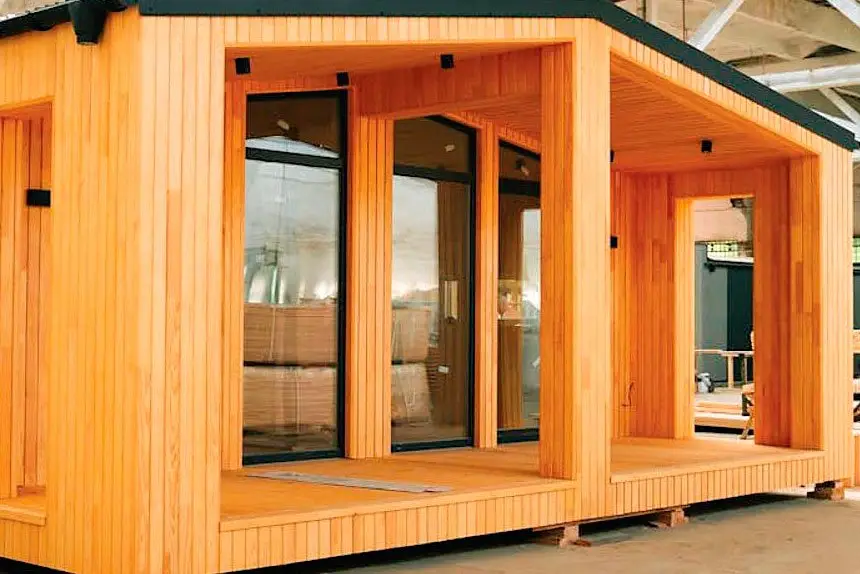
Prefabricated building technology offers promising alternative solutions to this dual crisis. Prefab housing modules are made offsite in a factory.
The finished components/modules can then be transported and assembled swiftly at the site of the building.This approach could transform the housing scene.
Affordable dwellings could be produced on a massive scale, while greatly reducing the environmental impacts. The components of modular housing are made in a factory and transported to the building site for assembly
COST-EFFICIENT AND ECO-FRIENDLY
Prefab modular construction could be considered a greener alternative in the construction sector.
By greatly reducing construction waste (which accounts for 40% of landfill) and carbon emissions, it tackles these major environmental concerns head-on.
A 2022 study showed modular construction can slash carbon emissions by up to 45% compared to conventional techniques.
The controlled factory-based environment of prefab construction makes it more efficient. This includes integrated reclamation and recycling of construction waste. This approach is highly cost-effective.
It’s about being resource-savvy and reducing waste to the bare minimum. Using standardised designs and components on a large scale also cuts the cost of incorporating energy-efficient elements such as better insulation and renewable energy.
Building in this way creates structures that are effective, efficient, resilient and help us combat climate change.
Among many possible construction materials, wood is among the most preferred for prefab modular buildings. Timber is renewable and an efficient carbon sink.
PREFAB BUILDINGS TAKE MANY FORMS
Modular homes can be enlarged, modified or even disassembled and moved as communities grow and needs change.
This approach promotes long-term resilience by being adaptable to changes in the climate and housing needs. These buildings are constructed not only for the present, but also for the high-performance requirements of the future.
England, Scandinavia, The Netherlands and Singapore all feature successful pre-fab housing villages.
SO WHAT’S STOPPING AUSTRALIA?
Australia has been slower than many countries to adopt prefab modular construction. The challenges include:
- Limited government support and incentives compared to other countries.
- A need for more training and expertise in designing and implementing prefab modular construction.
- The traditional procurement process in construction is not well suited for prefab methods, so a shift in thinking and approach from construction managers and suppliers is required.
- The Australian regulatory environment needs to evolve to promote productivity and support modern construction methods like prefabrication
- A cultural shift within the industry is also needed, so owners and developers demand more sustainable and efficient construction methods.
Article by: Ehsan Noroozinejad, senior researcher, Urban Transformations Research Centre, Western Sydney University; Parisa Ziaesaeidi associate lecturer in architecture, Western Sydney University. Extracts sourced from theconversation.com.au.