Realestate.com.au
SKYROCKETING property prices and rents across South East Queensland are forcing renters and first-home buyers to look interstate, with cities like Melbourne and regions in Tasmania emerging as more affordable alternatives.
New data from the PropTrack Home Price Index shows capital city property prices rose 9.1 per cent annually – the fastest pace since 2022 – with growth uneven across the country.
Brisbane recorded one of the sharpest increases, with prices climbing 15.9 per cent in the year to February, compared to just 3.4 per cent in Melbourne.
PRICED OUT OF QUEENSLAND
For many Australians, those numbers are more than statistics – they’re life-changing.
Mikaela Carroll and her partner Ryan are among those who made the move after being priced out of South East Queensland.
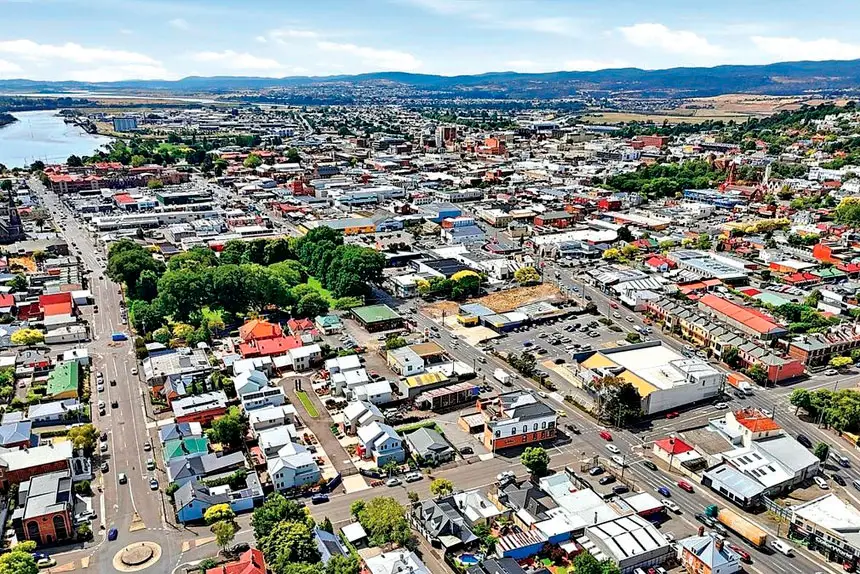
After initially leaving Brisbane during the pandemic, the couple eventually settled in Launceston, where they were able to buy a home within months.
With a median house price of about $688,000, Launceston offered a level of affordability and lifestyle they say would have been out of reach had they stayed in Queensland.
“We couldn’t imagine this level of liveability if we had stayed in South East Queensland,” Ms Carroll said.
RENTAL PRESSURE DRIVING DECISIONS
Rental affordability is also playing a major role in relocation decisions.
According to PropTrack data, median weekly rents sit at about $850 on the Gold Coast and $670 across greater Brisbane – significantly higher than Melbourne ($575) and Hobart ($573).
In Launceston, rents average around $550 per week, allowing tenants to save faster for a deposit.
Ms Carroll said the contrast was stark, recalling the intense competition for rentals in Queensland, where applications often had to be submitted immediately after inspections just to be considered.
The shift south reflects a broader national pattern, with younger Australians increasingly willing to relocate for affordability.
Research from the Regional Australia Institute found nearly half of Australians aged 18 to 29 would consider moving to regional areas, with housing costs the primary driver.
At the same time, rising demand in more affordable markets is beginning to push prices higher there as well.
Hobart has recorded annual growth above 10 per cent for the first time since 2022, while northern Tasmanian regions have also seen double-digit increases.
MELBOURNE’S AFFORDABILITY
Once considered one of Australia’s most expensive cities, Melbourne is now emerging as one of the most accessible capital city markets for both buyers and renters.
PropTrack senior economist Anne Flaherty said the perception of Melbourne as unaffordable had not kept pace with market changes.
“Melbourne has long been seen as the second most-expensive capital city, but it’s now one of the most affordable,” she said.
Over the past five years, Melbourne home prices have risen 12.7 per cent – a stark contrast to Brisbane’s surge of more than 95 per cent.
SUPPLY LAG BEHIND POPULATION GROWTH
Experts say the affordability gap is being driven in part by supply constraints in Queensland.
Population growth and interstate migration into South East Queensland have significantly outpaced new housing development, placing sustained pressure on both prices and rents.
By comparison, Melbourne’s larger housing supply and slower recent growth have created more opportunities for first-home buyers.
MARKET CYCLES AT PLAY
Industry figures suggest the trend may reflect a familiar property cycle.
Buyers’ agent Chaice Paterson said Melbourne appeared poised for a rebound after a slower growth period, while Queensland’s market remained overheated.
“Melbourne is a market that’s due for its next cycle, while Queensland is running hot,” he said.
For many Australians, however, the decision to move is less about market timing – and more about necessity – as affordability continues to shape where and how people live.