

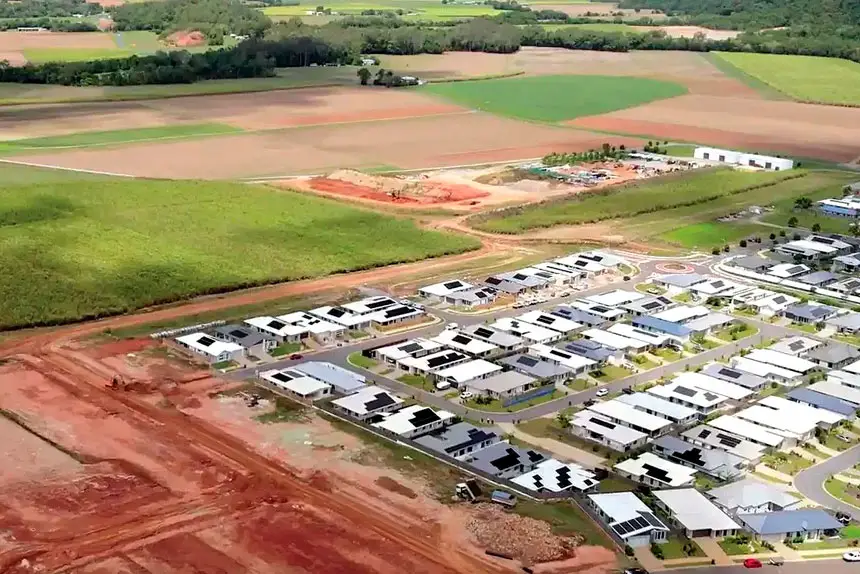
A major $2.4 billion housing agreement between the Commonwealth and Queensland Governments will deliver more than 51,000 new homes across the state, including over 20,000 reserved exclusively for first home buyers.
The deal brings together $2 billion in Commonwealth support and a $399 million contribution from the Queensland Government, alongside a broader State and Federal push to address housing supply constraints and affordability pressures.
The funding will be directed towards essential enabling infrastructure, including road upgrades, sewerage systems, water services and power connections needed to unlock major greenfield developments.
Priority Development Areas targeted under the agreement include Mount Peter, Southern Thornlands and Waraba, with additional growth corridors also under consideration.

The first homes delivered under the program are expected to be completed by mid-2028.
The agreement forms part of the Commonwealth’s broader housing agenda, including its commitment to help build 100,000 homes for first home buyers in partnership with states and industry, as well as wider national initiatives aimed at increasing social and affordable housing supply.
Federal Housing Minister Clare O’Neil said the investment would unlock thousands of homes by focusing on essential infrastructure.
“We’re investing in the boring but essential infrastructure like roads and sewerage that help us unlock more homes for Queenslanders,” she said.
Treasurer Jim Chalmers said the deal would help more Australians into home ownership by increasing supply and prioritising first home buyers.
Queensland Deputy Premier Jarrod Bleijie said the State was focused on accelerating supply through land activation and infrastructure delivery, describing the approach as “supply, supply, supply”.
Queensland Housing Minister Sam O’Connor said the agreement would help unlock land and streamline delivery of new housing developments, supporting more Queenslanders into home ownership.
The agreement is part of a wider housing strategy that includes deposit support schemes, stamp duty relief for new builds, and expanded social and affordable housing initiatives.
Officials from both governments say the partnership represents a significant step towards improving housing availability.