2024 is the Year of the Dragon – so here are some interesting facts about real-life dragons….
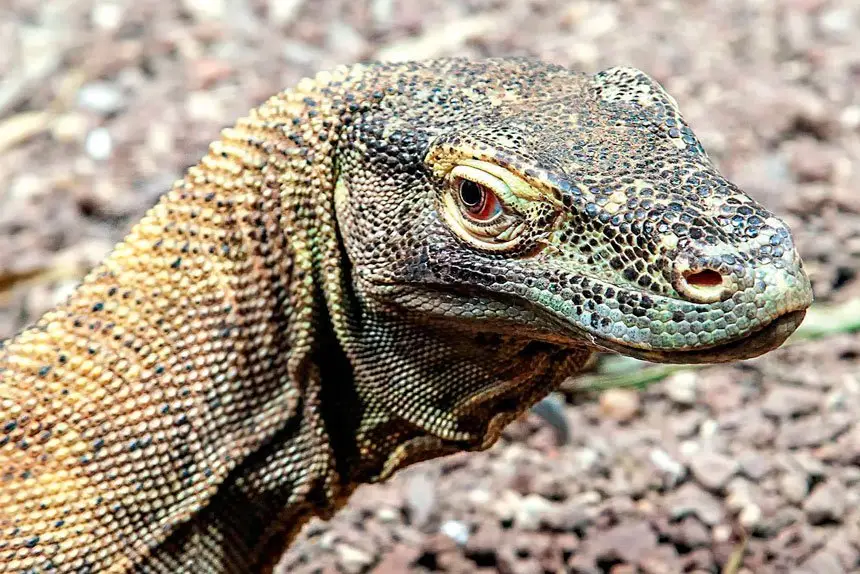
The Komodo dragon (Varanus komodoensis), also known as the Komodo monitor, is a member of the monitor lizard family that is endemic to the Indonesian islands of Komodo etc. It is the largest still -existing species, growing to a maximum length of 3 m (9.8 ft), and weighing up to 70 kg (150 lb).
As a result of their size, Komodo dragons are apex predators, and dominate the ecosystems in which they live. Komodo dragons hunt and ambush prey including invertebrates, birds, and mammals. Komodo dragons’ group behaviour in hunting is exceptional in the reptile world.
Pogona is a genus of reptiles containing eight lizard species, which are often known by the common name of ‘bearded dragons’. The name “bearded dragon” refers to the underside of the throat (or “beard”) of the lizard, which can turn black and puff up for a number of reasons, most often as a result of stress, if they feel threatened, or are trying to entice a mate.
They are a semiarboreal species, spending significant amounts of time on branches, in bushes, and near human habitation. Pogona species bask on rocks and branches in the mornings and afternoons and sleep at night. Their diet consists primarily of vegetation and some insects. They are found throughout much of Australia and inhabit environments such as deserts, and shrublands.
The frilled lizard (Chlamydosaurus kingii), also known as the frillneck lizard, frill-necked lizard or frilled dragon, is a species of lizard. It is native to northern Australia and southern New Guinea. This species is the only member of the genus Chlamydosaurus. Its common names come from the large ‘frill’ around’ its neck, which usually stays folded against the lizard’s body. It reaches 90 cm (35 in) from head to tail and can weigh 600g (1.3 lb). Males are larger and more robust than females. The lizard’s body is generally grey, brown, orangish-brown, or black in colour. The frills have red, orange, yellow, or white colours.
The Water Dragon can be identified by a distinctively deep angular head and nuchal crest of spinose scales that joins the vertebral crest extending down the length of its body to the tail.
Colouration differs between the subspecies; the Eastern Water Dragon, Intellagama lesueurii lesueurii, has a grey to brownish-grey colour above with patterns of black stripes along the dorsal ridge as well as down the tail. There is also a dark stripe horizontally from the eye back over the tympanum and extending down the neck. The limbs are mostly black with spots and stripes of grey and the tail is patterned with grey and black stripes.
The ventral surface is yellowish-brown, with the chest and upper belly becoming bright red in mature males.