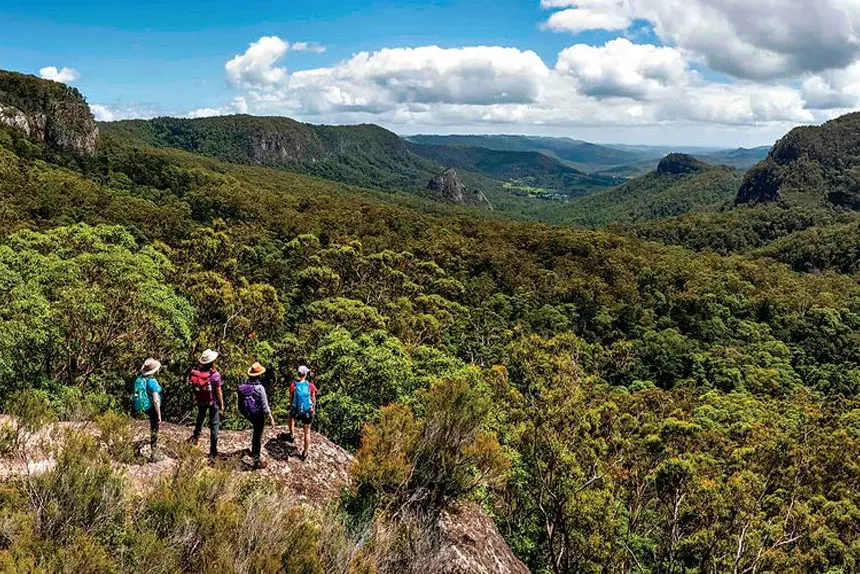
THE Scenic Rim Trail is emerging as a cornerstone project for the region, reinforcing its reputation as a leading destination for low-impact, nature-based tourism.
Since opening in 2020, the multi-day walking experience has drawn visitors seeking immersive encounters with the region’s rugged landscapes, rather than short, high-volume visits.
By linking existing tracks across the remote ranges of Main Range National Park, the trail offers access to areas of the Scenic Rim that were previously difficult for the public to experience over extended periods.
The four-day hike has delivered economic benefits across the region, with visitors staying longer and supporting local accommodation providers, guides, transport operators and hospitality businesses.

Much of the supporting accommodation is located outside the national park, helping ensure tourism spending flows into surrounding towns and communities.
The project has also become a case study in balancing tourism development with environmental protection. Infrastructure associated with the trail was designed to minimise disturbance, with eco-camps located in previously disturbed areas and built with compact footprints.
Environmental considerations were central to the project’s planning and approval, reflecting the sensitivity of its location near the northern edge of the Gondwana Rainforests of Australia World Heritage Area.
Developers were required to demonstrate how the trail and its facilities would preserve the natural values of the park while providing safe and sustainable visitor access.
Cultural heritage protection was also embedded in the development process, with compliance required under relevant Aboriginal and Torres Strait Islander cultural heritage legislation.
This ensured the trail’s design and operation recognised the cultural significance of the land alongside its environmental importance.
Local tourism stakeholders say the Scenic Rim Trail has helped shift the region’s profile towards high-quality, experience-led tourism that aligns with community expectations and conservation priorities.
As visitation continues to grow, the Scenic Rim Trail is increasingly seen as a model for future tourism development in the region.
It demonstrates how private investment, public access and environmental stewardship can work together to support long-term economic and community outcomes without compromising the landscapes that define the Scenic Rim.