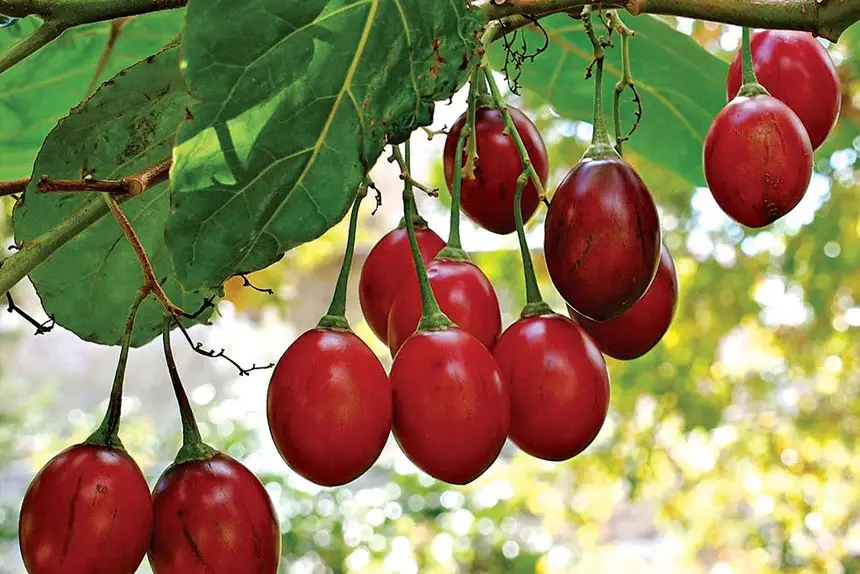
The tamarillo, more commonly known as the tree tomato, remains one of the most underrated fruit trees for home gardeners, offering both rapid growth and impressive yields.
Among the fastest fruiting trees available, tamarillos can produce fruit within two years when grown from seed.
Established plants often fruit in under a year, making them an appealing option for gardeners seeking quick results.
Under favourable conditions, young trees can carry dozens of fruit within their first growing season.

While the plant shares some characteristics with the tomato, its fruit has a much thicker skin, similar to that of a passionfruit.
This tough exterior helps protect it from many common garden pests.
Inside, the fruit contains numerous edible seeds suspended in a soft, pulpy flesh.
Tamarillos can be eaten fresh, with the flesh scooped directly from the skin, or added to breakfast cereals.
When harvested in abundance, the fruit can also be preserved as jam, offering a mildly sweet flavour with hints often compared to strawberry. Served warm on scones, it makes a popular homemade treat.
The tree itself is small and spreading, supported by a slender trunk. Branches can become brittle, particularly when weighed down with heavy crops, so care is required as the fruit develops.
Fruit grow in clusters and vary in colour during maturation, ranging from deep burgundy to shades of pink and red.
Their elongated, egg-like shape makes them easily recognisable.
Early tip pruning encourages branching at the desired height, helping to establish a strong tree structure.
Once mature, pruning requirements are minimal and generally limited to removing dead or ageing wood.
Heavier pruning has been linked to larger fruit production.
With its large, glossy leaves and vibrant fruit display, the tamarillo is as ornamental as it is productive.
When heavily laden, the tree is often likened to a Christmas tree decorated with colourful baubles.