AS winter sport sign-on days continue and pre-season training sessions fast approach across Australia, community clubs are bracing for a familiar challenge – keeping teenagers involved long enough to pull on a jersey, lace up boots and stay in the game.
Each year, an estimated 30,000 Australian teenagers drop out of organised sport, most commonly between the ages of 13 and 17.
Experts say the reasons are complex but consistent. As teenagers grow older, school workloads increase, part-time jobs become more common and social priorities shift. At the same time, organised sport often becomes more demanding, with longer training sessions, greater travel requirements and higher expectations around performance.
Bremer State High School Basketball Academy director and coach James Ringholt said barriers varied by region and sport, but some challenges were particularly acute in Ipswich.
“I know that in Ipswich the cost of sport is a barrier for a large number of our families,” he said.
“In addition to this, Ipswich’s sporting facilities being built and maintained to a lower standard than facilities in other regions of South East Queensland contributes negatively to participation in our region.
“For example, Logan is working on building their fourth council-funded indoor sports centre. Ipswich has zero council-funded indoor sporting facilities, and zero plans to construct one.”
Ringholt, who has been involved in Queensland’s basketball community for nearly three decades, said teenage girls were particularly at risk of leaving competitive sport.
“The number one concern we have is girls opting to move away from competitive sport after the age of 15 or 16,” he said.
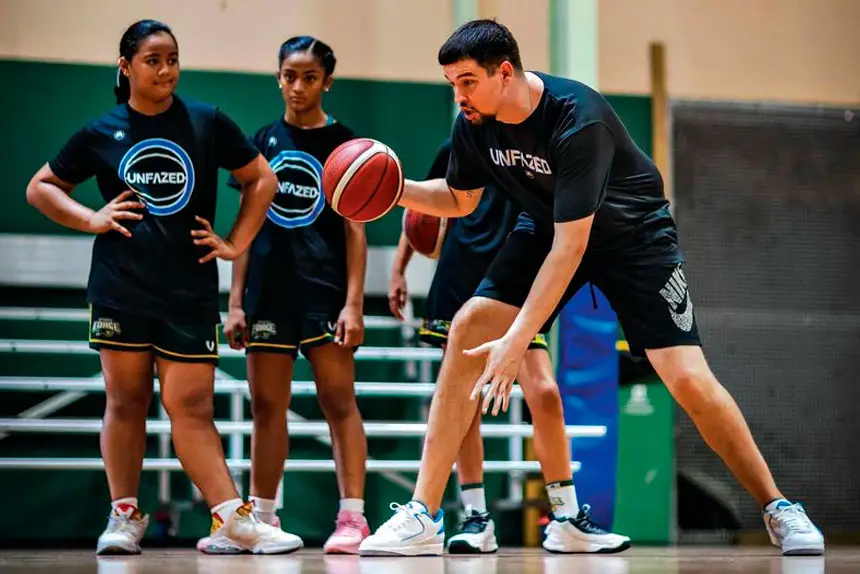
“Whether it’s at Ipswich Basketball Association, Bremer State High School’s Basketball Academy or Unfazed Hoops, our focus is creating transformative developmental pathways for young people that have clear progression as they gain experience. Through reflective practice, we’ve seen our athletes remain highly engaged across the programs we offer.”
The dropout trend is not evenly spread. Teenage girls leave organised sport at higher rates than boys, particularly during mid-adolescence, while young people from lower-income families and those with disability face additional barriers linked to cost, confidence and access to inclusive programs.
At a community level, the loss of teenage players threatens the sustainability of local clubs, volunteer networks and long-term player pathways.
Many clubs rely on teenage participants not only to field teams, but to become future coaches, officials and volunteers.
With winter seasons looming, sporting organisations are increasingly shifting their focus from recruitment alone to retention.
“It doesn’t have to be elite or perfect to be valuable,” Ringholt said. “If we can make sport accessible, supportive and genuinely enjoyable, young people will stay – and our clubs, communities and future pathways will be stronger because of it.”