
FOR South East Queensland beekeepers, the battle against varroa mite has entered a new phase, with plans for eradication now behind them and education becoming the industry’s greatest weapon
Industry leaders say practical training and support are now just as important as scientific research, with every beekeeper needing to understand how to monitor, treat and manage varroa if Australia’s pollination industry is to survive.
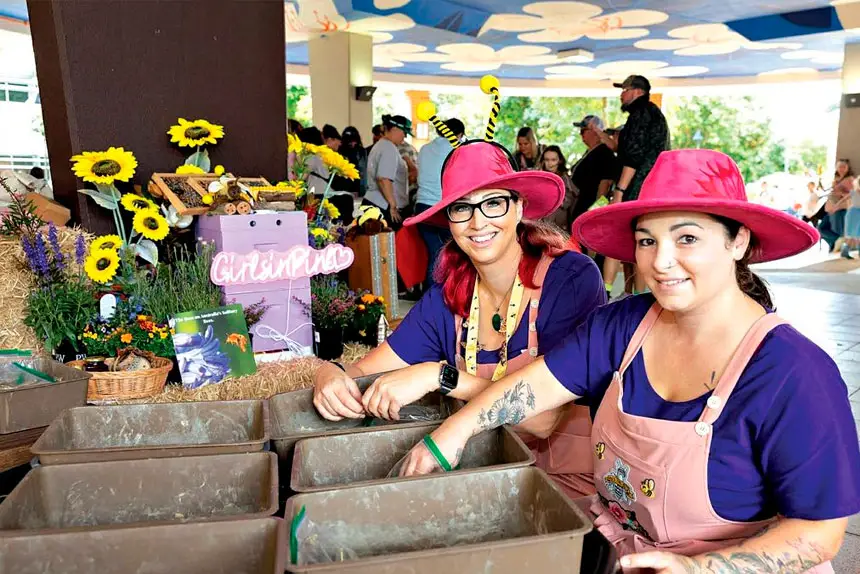
For Ally and Steph, better known as The Girls in Pink, that education is already happening.
As beekeepers and passionate educators, the pair are preparing the next generation through Bees In School, a program run by Steph at Brisbane Bayside College and Beaudesert State High School, where students learn hive management, honey production, pest control and now, increasingly, how to live with varroa mite.

“We actually have honey bee hives inside the schools, and the kids are the ones working them,” Steph said.
“We’ve been teaching them varroa mite management for more than 12 months.
“They learnt very quickly that one treatment isn’t enough and that you have to manage it in many different ways.”
Ally said Australia’s future depended on educating both commercial and backyard beekeepers.
“Education for beekeepers has to be the number one priority,” she said.
“We’re no longer talking about eradication. We’re talking about learning to manage varroa.”
Managed honey bees contribute an estimated $14.2 billion to Australia’s economy each year, not just through honey production but through pollination.
Around one-third of Australia’s agricultural and horticultural output relies on managed honey bees, while approximately 65 per cent of agricultural crops and 35 per cent of the nation’s food supply depend on commercial pollination.
For operators like Bee All Natural beekeeper Jason Roebig, the financial cost has become almost impossible to absorb.
When the Flagstone-based business still operated around 450 hives, those costs escalated rapidly.
“In an effort to save our bees, we implemented weekly inspections, monitoring and treatments,” Mr Roebig said.
“The direct cost was about $11,362 every month.
“Over just three months, we spent an estimated $34,000. Despite this extraordinary effort, we have still lost almost 80 per cent.”