Have you ever wanted to increase the size and area of your garden but you don’t have the room? Well you can by going vertical, that’s right, going up and it’s real easy to do. You can increase the size of your garden quite a bit if you want.
Say you have a garden area 2mt x .8mtr. Or 1.6 sq mt. By adding some vertical fencing to two areas, you will increase your garden area to roughly 9sq mtr, depending how high you go, and be able to grow more different types of vegetables all at once.
So, how do we go about this increase in size. First off, purchase four steel 2.4 mt. garden stakes. (Timber is cheaper but won’t last as long as steel).
Now, measure at the end of each side of the garden say 300mm in and using a heavy hammer or a steel stake striker, hammer into the soil at least 300mm or more at an angle of about 5degrees, facing outside of vertical…… Why do we do this?
If the stakes were vertical to start with when we join the stakes together with wire, the pressure would bend the steel so that they were bending inwards (doesn’t look good)
This way the steel will still bend but will end up nice and vertical. (We hope!)
Next, tie some fencing wire, or slightly smaller for ease of bending, and stretch wire between the tops of the two posts. You will find there are holes in the post where the wire can be threaded.
So! You tie off one post and thread through the post at the other end, (pulling taught allowing the steel to bend back to vertical) then go down to the next hole, threading it through to go back to the other end all the while keeping it taut, (and so on) with probably about 4-5 cross wires in total.
Being very careful to just pull tight enough.
Now the next one you could probably do the same, or you could just use the top, bottom and middle wire and string some chook wire between the post and tie this on with fencing clips. Now you have the makings of a vertical garden. As most plants that grow vertically are mainly bushy from about 450mm up, you now have room ( about 300mm) to plant veges in front or even between the trellis.
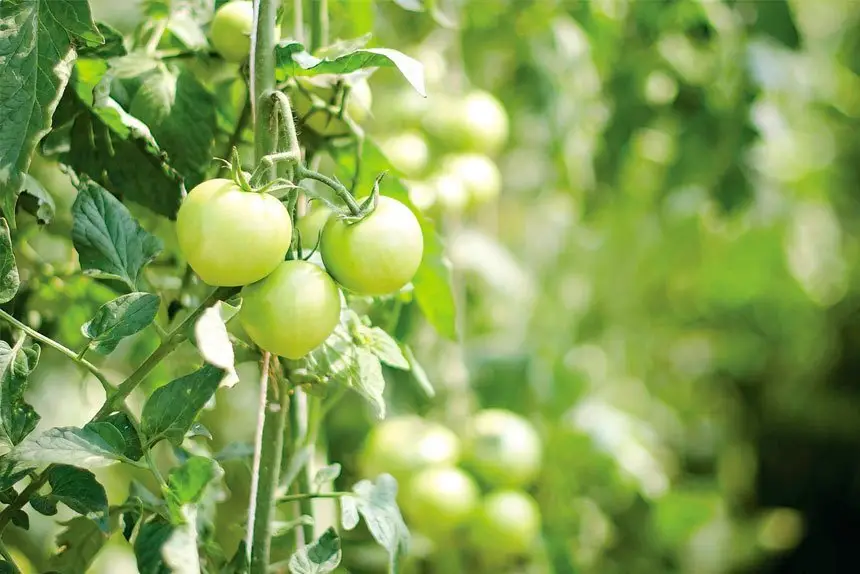
Now what can I plant in my new garden! First of all, let’s look at the trellis. There are many plants available to grow in this situation and in season of course. Tomatoes are one of the best, planting the vine type that you can train, not the bushy ones.
Whether you plant a full row or only part, it’s up to you. But planting just a few, allows you to try other vegetables like climbing beans or snow peas, or even those of the cucumber family. It really allows you variety.
It’s also handy to know that you can actually grow the dwarf type pumpkins successfully on a trellis. (that’s why the trellis must be strong, in case you were wondering).
In the meantime down at the front and middle of the garden smaller plants such as lettuce, dwarf cabbage, carrots, peas and bush beans and many others could be grown. Thereby filling your patch with all sorts of food for the family.