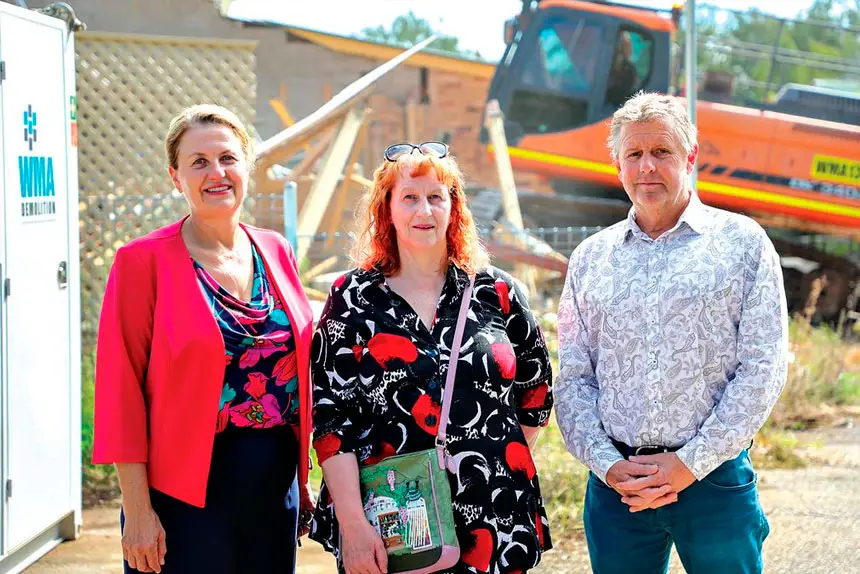
FOR Stephanie Shipman, leaving the Navy didn’t mean leaving service behind – it simply meant redefining it.
Now Treasurer of the Greater Springfield RSL Sub Branch, Ms Shipman is helping lead a quiet transformation in how veterans, particularly younger ones, are supported in the community.
After nine years in the Royal Australian Navy, Ms Shipman’s career spanned high-stakes operations and historic milestones.
As a communications and information systems sailor, she served aboard HMAS Perth during its Anti-Ship Missile Defence upgrade – an Australian-first for a ship of its class.
She later took part in border protection missions near Christmas Island and deployed to the Middle East, working on anti-piracy, drug and weapons removal operations.
“Defence isn’t just a job,” Ms Shipman said.
“You spend more time with the people you serve with than your own family. When that’s gone, there’s definitely a sense of loss.
“I didn’t realise straight away, but I was dealing with PTSD and an adjustment disorder.
“You think you’re adaptable, but you’re rebuilding everything – your identity, your networks, your purpose.
“When people don’t have that connection, that sense of purpose, things can spiral.
“That’s why what happens in those first 12 to 18 months after leaving is so important.”
Before moving to the Ipswich region, Ms Shipman worked closely with young veteran networks on the Sunshine Coast, where she saw a different model of support in action – one built around community, activity and inclusion.
Arriving in the Ipswich area, she was struck by the contrast.
“There just wasn’t that same culture for younger veterans,” she said.
“A lot of traditional RSL spaces are geared towards older generations, and younger veterans don’t feel like they belong there.”
Alongside fellow veterans, Ms Shipman stepped into a leadership role at the Greater Springfield RSL Sub Branch at a time when it was looking to rebuild.
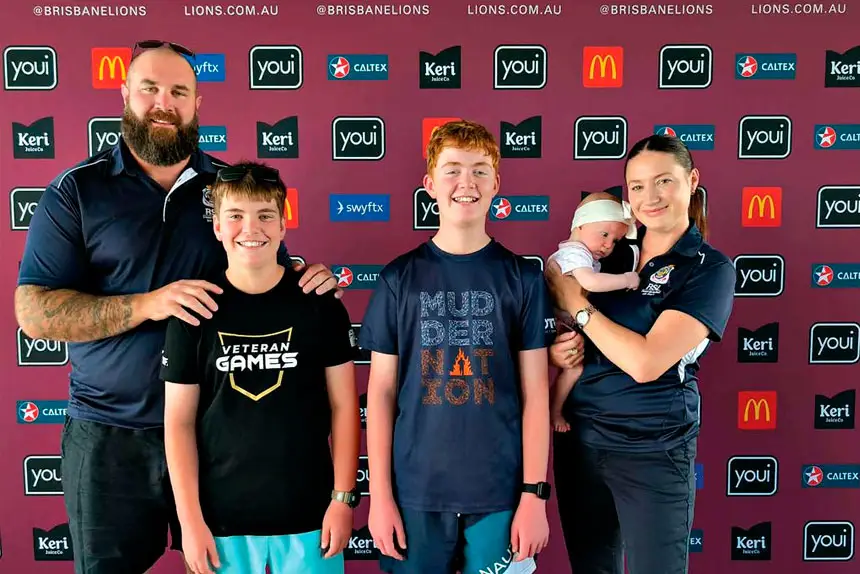
“We’ve really centred everything around families and connection,” she said.
“We had 60 to 70 people turn up to a free barbecue, and everyone brought their kids,”
“That’s what people are looking for – something that fits into their lives.”
It’s a stark contrast to the more formal, daytime events that have traditionally defined many RSL activities – events that can be difficult for younger veterans balancing work and family commitments.
“If you want younger veterans to engage, you have to meet them where they are,” Ms Shipman said.
“You can’t expect them to walk into spaces that don’t reflect their reality.”
For Ms Shipman, the issue goes beyond attendance – it’s about reshaping the narrative around what it means to be a veteran.
“When people hear the word ‘veteran’, they still picture someone in their 80s or 90s,” she said.
“But there are thousands of younger veterans out there, raising families, building careers, and dealing with the challenges of transition right now.
“There’s always going to be an important place for remembrance and honouring those who served.
“But it can’t be the only focus.”
Instead, she’s advocating for a more balanced approach – one that also prioritises well-being, connection and a sense of belonging.