
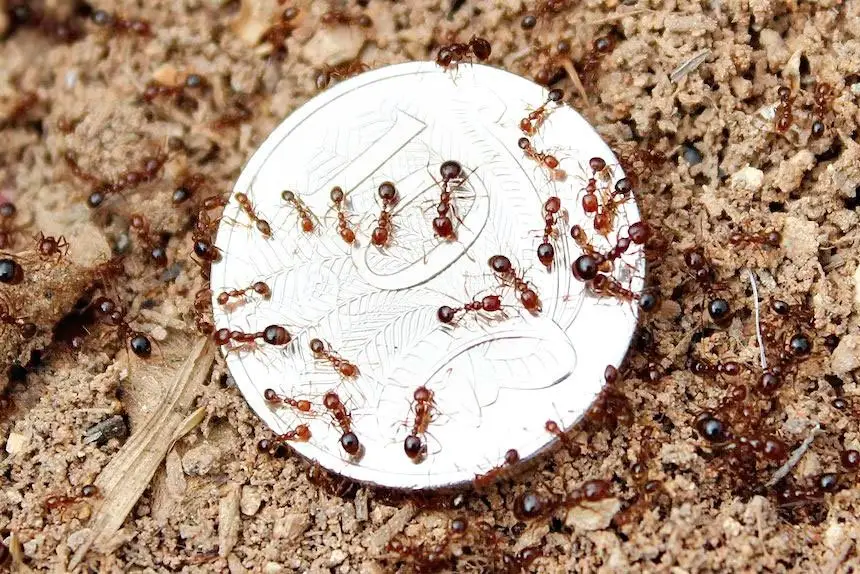
FOLLOWING the State Government’s record $24 million investment to combat the spread of fire ants, Blair has been identified as a priority electorate in the fight against the invasive species.
The boost brings total state funding for the Fire Ant Suppression Taskforce to $61 million, enabling aerial treatments across 212,000 hectares in South East Queensland over the next two years.
While the investment is welcomed, local residents are feeling the impact of the fire ant crisis firsthand.
Goodna resident Sara Mitchell recalled a frightening encounter with the pests in her own backyard.

“I stepped outside barefoot for just a few seconds, and before I knew it, my foot was covered in them,” Ms Mitchell said.
“The pain was instant, like my skin was on fire.
“My ankle swelled up, and I ended up at the doctor because the bites got infected. It’s terrifying knowing they’re in our parks and backyards.”
Ms Mitchell is not alone. Since recent cyclone events, over 50 Queenslanders have suffered serious stings, with 23 cases reported this month alone.
Local advocates are urging the Federal Government to match the funding to prevent further devastation, however Federal Member for Blair Shayne Neumann told Local Ipswich News that the Federal Government took the threat seriously and was delivering funding.
“Our government has committed nearly four times the previous commitment made to eradicate red imported fire ants,” Mr Neumann said.
“We are taking a large share of the responsibility in measures to eradicate fire ants by providing $296.4 million over four years to 2027.
“The former Liberal government gave up on fire ant eradication, cutting the funding every year and leaving just $15 million a year.
“The current Federal Labor Government has reversed those reckless fire ant budget cuts by investing almost five times as much over the next three years.”
The Invasive Species Council welcomed the funding commitments, with Advocacy Manager Reece Pianta stressing that further action was needed.
“If eradication fails, the cost will fall on everyday Australians,” Mr Pianta warned.
“Families will have to use stronger chemicals in their backyards, councils will need to treat parks and beaches, and sports clubs will be forced to manage infested fields.”
A 2021 study by Central Queensland University estimating that an uncontrolled fire ant spread could cost Australia’s agricultural sector $1 billion annually.