
Beny Bol says investing in young people and multicultural communities is key to the nation’s future
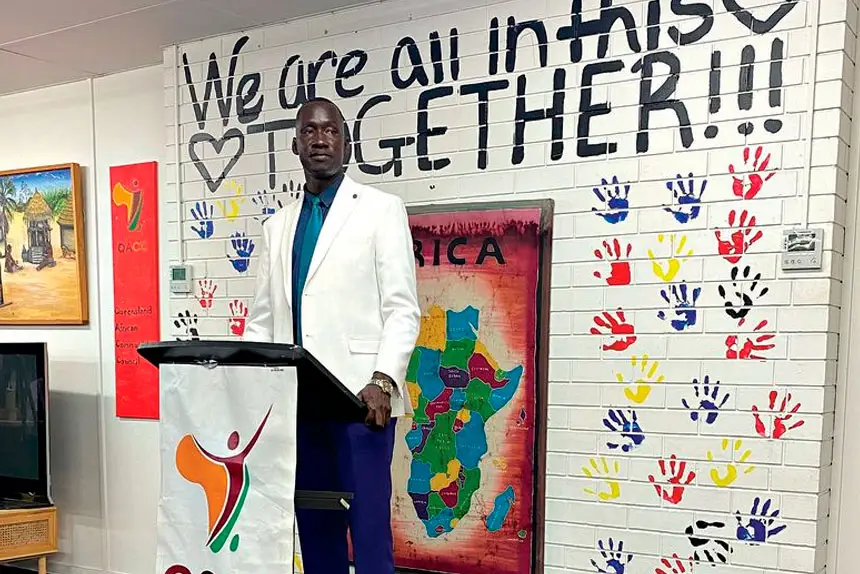
FOR respected community advocate Beny Bol, Australia’s future will ultimately be shaped by how willing the nation is to invest in the next generation and embrace the reality of its changing identity.
Speaking candidly about multiculturalism, leadership and social cohesion in the leadup to National Refugee Week, Mr Bol said every generation faced unique challenges, and it was the responsibility of today’s leaders and institutions to prepare young Australians for an increasingly complex society.
“Australia is a different country to what it was 50 or 60 years ago,” he said.
“Our multiculturalism and diversity have grown significantly. We need institutions that reflect those changes and understand the opportunities and complexities that come with them.”

Mr Bol said many refugee and migrant communities arrived in Australia carrying deep trauma, grief and disconnection after fleeing conflict, persecution and hardship overseas, while simultaneously attempting to rebuild their lives within unfamiliar systems and cultures.
“We need our systems to be prepared to deal with those complexities in a way that doesn’t treat them as a burden, but as an opportunity to grow and improve,” he said.
“When people choose to come to this country, they love this country.
“There should never be any argument about which Australians love Australia more. We all love Australia. That is why we are here.”
Throughout the conversation, Mr Bol repeatedly returned to the importance of collective responsibility, arguing that complex social issues could not be solved through blame or division.
“We must embrace the reality that Australia has changed,” he said.
“We should be proud of who we are and defend our peace, harmony and democracy together.”
Now regarded as one of the country’s leading voices on multiculturalism and youth advocacy, Mr Bol said his own story had been shaped by compassion, opportunity and education.
Born in a remote village where he became the only child to attend school, he later arrived in Australia through the humanitarian program without any family connections in the country, going on to study International Law and International Relations.
“If people who look like me are excluded from leadership positions, from Parliament, from executive roles, then we are not going to address these issues properly,” he said.
Mr Bol said meaningful progress had already been achieved in reducing youth disengagement and offending through genuine community- led initiatives, particularly within African-Australian communities.
“We have seen significant change because communities have become part of the solution rather than being left outside the system.”
Despite the challenges facing Australia, Mr Bol said he remained optimistic about the nation’s future and believed its greatest strength continued to be its humanity.
“At the end of the day, before religion, race or nationality, we are human beings,” he said.
“We all want dignity. We all want respect. We all want peace and opportunity for our families.
“That is what should unite us.”