
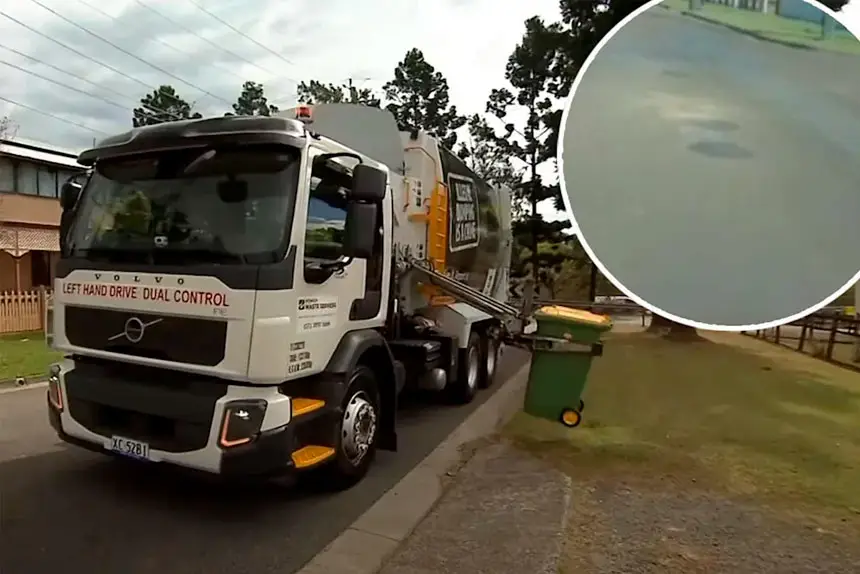
FROM spotting potholes from the side of a garbage truck to making sure sprinklers do not fire up halfway through footy training, artificial intelligence and smart technology are changing the way Ipswich City Council looks after the city.
More than 9500 potholes have been detected by AI-equipped cameras mounted on Council waste trucks during the past year, helping crews identify and repair road defects before residents need to report them.
Urgent defects can be repaired within 24 hours, as Ipswich Mayor Teresa Harding said the technology was allowing Council to respond faster, improve safety and make better use of ratepayer money.
“Ipswich has always been an early adopter of smart technology, with our Safe City program and smart-equipped machinery setting the benchmark for how councils can apply innovation to improve services,” Mayor Harding said.

“When potholes are detected earlier and fields are watered more intelligently, the whole community benefits.”
Of the potholes identified by the technology during the past year, 2789 were considered serious enough to be escalated for repair.
Since the system was introduced, Council said total pothole reports had fallen 43 per cent, standard pothole maintenance requests were down 42 per cent and urgent Priority 1 requests had dropped 51.4 per cent.
But potholes are not the only things being spotted by the AI system, which costs 40,000 per year.
It also has detected almost 5500 other defects during the past year, including damaged signs, faded line markings, pavement problems and overhanging trees.
Mayor Harding stressed the technology was designed to support Council workers rather than replace them.
The smart-city push has also moved from Ipswich’s roads to its sporting fields, with weather-responsive irrigation technology now installed at 14 parks and sporting facilities.
The systems calculate how much water individual fields need and adjust watering according to weather conditions, reducing unnecessary water use while helping maintain playing surfaces.
“The old controllers were becoming increasingly unreliable, with systems sometimes switching on at the wrong times, even during training sessions and games, causing frustration for clubs and unnecessary water use,” Mayor Harding said.
“The new controllers remove that risk by calculating exactly how much water each field needs, meaning turf is watered only when required and at the right levels.”
The rollout includes major sporting facilities at Limestone Park, North Ipswich, Raceview, Springfield and Goodna, as well as parks at Brassall, Woodend, Yamanto and Rosewood.
“Together, these initiatives mark a shift toward a more connected, responsive and data-driven city, one where smart infrastructure quietly improves daily life,” Mayor Harding said.