

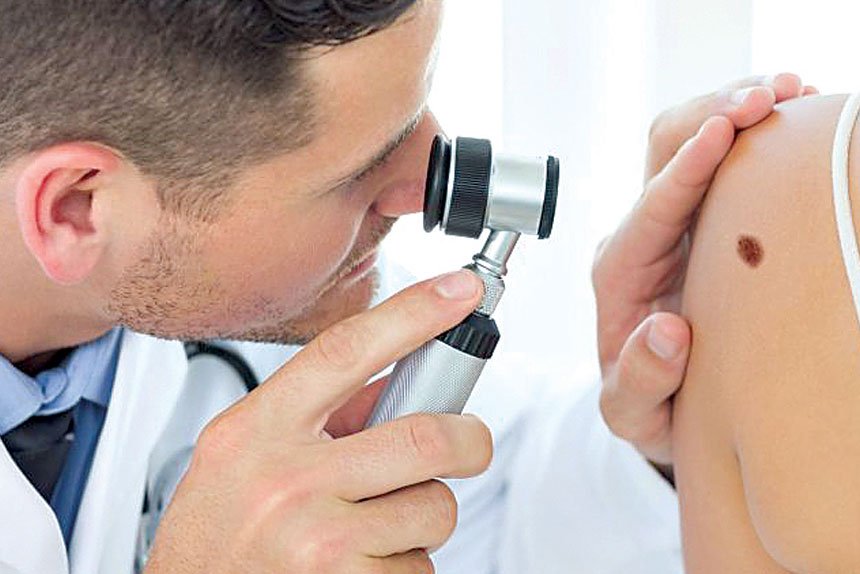
AS we come out of winter hibernation, we once again read about the dangers of not protecting our skin from the sun.
For many of us, myself included, the damage had already been done long ago.
It may have been that day out on the cricket field without a hat on, getting burnt at a friend’s swimming pool party or the idea that a dark tan was the way to go and coconut oil was the way to achieve it.
I have been a regular at a local skin cancer clinic since I discovered a BCC on my forehead 25 years ago and over the past years ave regularly had to get Basal cell carcinomas (BCC) frozen or if they were too large cut out.

I joke to friends that I am a patchwork quilt these days with BCC’s removed from my face, back and even one from behind my knee.
Surprisingly, the doctor told me that it was not an uncommon place to discover a BCC hiding.
He also told me that it was concerning that many older residents had never had their skin checked.
“Many only come along when they believe they have an issue and we invariably discover that firstly, they should have come along earlier and secondly they also had other BCC’s growing,” he said.
THE FACTS
A BCC is the most common but the least dangerous type of skin cancer.
About 75 per cent of skin cancers in Australia are BCCs.
They grow slowly over months or years and rarely spread to other parts of the body.
However, if they are not treated, they may form an ulcer (that is, a break or hole in the skin which does not heal), and as this enlarges and deepens it may cause damage to tissue and organs nearby for instance, the eyelids or nose.
In rare instances basal cell carcinomas can be life threatening, especially those occurring on the face where they can penetrate deeply.
BCCs occur most often on the head, neck, or upper trunk, though they may appear on other parts of the body.
They usually start as small round or flattened lumps which are red, pale, or pearly in colour, and may have blood vessels on the surface.
A BCC may also appear as a small area of scaling, like a patch of eczema.
If you have one BCC you are likely to have others, either at the same time or in later years.
They are most common in people over 40 years of age, but also occur in younger adults.
Skin Cancer clinics are now located in many areas throughout Ipswich, but a word of warning.
It’s difficult to get an appointment and you may have to shop around until you can find one to make regular visits to.