

JOHN Bernard “Jack” Mundey is a name almost unknown to most of the modern generation but he was an Australian conservation campaigner who has had a massive influence on the environmental political movement across the entire planet.
Born in Malanda, North Queensland, in 1929, he was an Australian communist, trade unionist and environmental activist who came to prominence in the mid-1970s during a campaign to protect the natural environment and urban cultural heritage around Sydney.
While he started his political career as a union leader, a request for assistance from a group of urban environmentalists transformed his life.
In the early 1970s, developers threatened the last untouched bushland on the Parramatta River, called Kelly’s Bush, only a few kilometres west of Sydney Harbour. After approaches to others failed, a group called Friends of Kelly’s Bush sought help from the New South Wales branch of the Builders’ Labourers Federation (BLF), which was headed by Mundey.

In response, and supported by a public meeting of 600 people who unanimously endorsed the action, the BLF invoked a ban on development at Kelly’s Bush.
This was the first of 42 BLF bans to preserve bushland areas and cultural heritage sites around Sydney, with Mundey deciding to call them “Green Bans”.
Environmentalists around the world hailed the Green Bans as a blueprint for environmental action, and a visiting German conservationist took the concept back to Germany, where she inspired a group of political activists to form the world’s first Green Party.
Conservation campaigns in Australia developed very slowly in the early years, but between the 1960s and 1983, several events catalysed massive changes including the Lake Pedder campaign of the 1960s and early 1970s, along with the Franklin Dam campaign in the early 1980s.
Throughout these campaigns, there was considerable violence and at least three campaigners are believed to have been murdered.
Some commentators dispute this claim, because no bodies have ever been found and the crimes have never been proven beyond doubt.
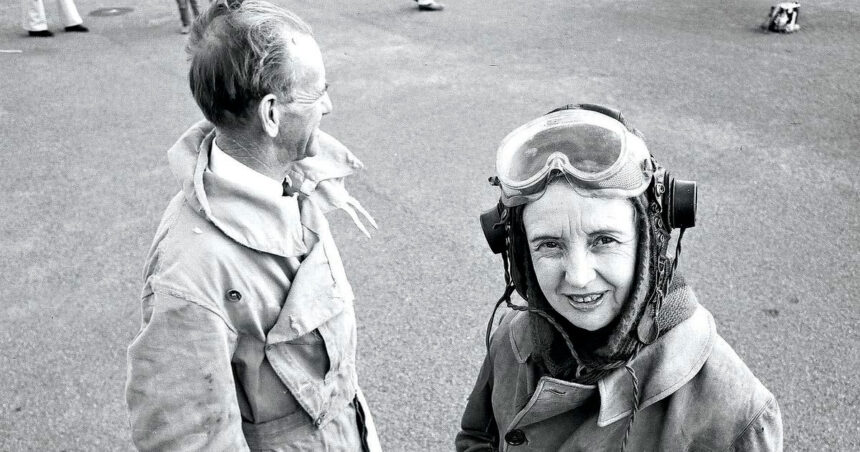
Brenda Hean and pilot Max Price took off from an airport near Hobart on September, 1972 in Price’s Tiger Moth, planning to skywrite “Save Lake Pedder” above Canberra’s Parliament House.
They disappeared without trace, vanishing over the ocean.
There was strong evidence that the plane was sabotaged, with the hangar having been broken into the night before, and the plane’s safety gear was later found concealed in the hangar.
There are mixed opinions on whether the Tasmanian Government ever took the search for Hean and Price seriously, since the Government in that era was fiercely “pro-dam” and “anti-conservationist” in its policies.
While the Franklin campaign was massive, many historians argue that Mundey’s Sydney Green Bans campaign of the early 1970s was the real start of the modern environment movement in Australia.
The reason is that this campaign involved the environment being placed above traditional social and political divisions and was also the campaign that sparked the modern political term “green”.
One of its prominent opponents was Juanita Nielsen, a socialite and small newspaper publisher who used her newspaper to generate public opposition to the development. This heritage conservation campaign was soon to become a major focus of Mundey’s Green Bans.
Nielsen disappeared on the night of July 4, 1975 and is presumed to have been murdered, but her body was never found.
Jack Mundey died on May 10, 2020, aged 90.